

The Christmas tree has a rich history that dates back centuries, with its origins often traced to ancient pagan traditions.
The use of evergreen trees and plants during winter solstice celebrations predates Christianity. Ancient Egyptians, for example, used palm fronds to symbolize the triumph of life over death during the winter solstice. Similarly, the Druids in ancient Britain and the Romans used evergreen boughs to decorate their homes during the winter months.
The modern Christmas tree tradition is widely believed to have originated in Germany in the 16th century. It is said that devout Christians began bringing decorated trees into their homes as a symbol of faith.
The earliest documented use of a Christmas tree in a home was in 1570 in the town of Strasbourg.
Initially, trees were decorated with apples, nuts, and paper flowers. Over time, the decorations evolved to include candles, which represented the light of Christ, and later, glass ornaments, tinsel, and other festive adornments.
The Christmas tree tradition gradually spread to other parts of Europe. By the 18th and 19th centuries, it became popular in countries like France and England. In England, Queen Charlotte, the German wife of King George III, is credited with introducing the Christmas tree to the British court in the early 1800s.
The Christmas tree gained widespread popularity in England when Queen Victoria and her husband, Prince Albert, were depicted in a drawing in 1848 standing with their children around a decorated tree.
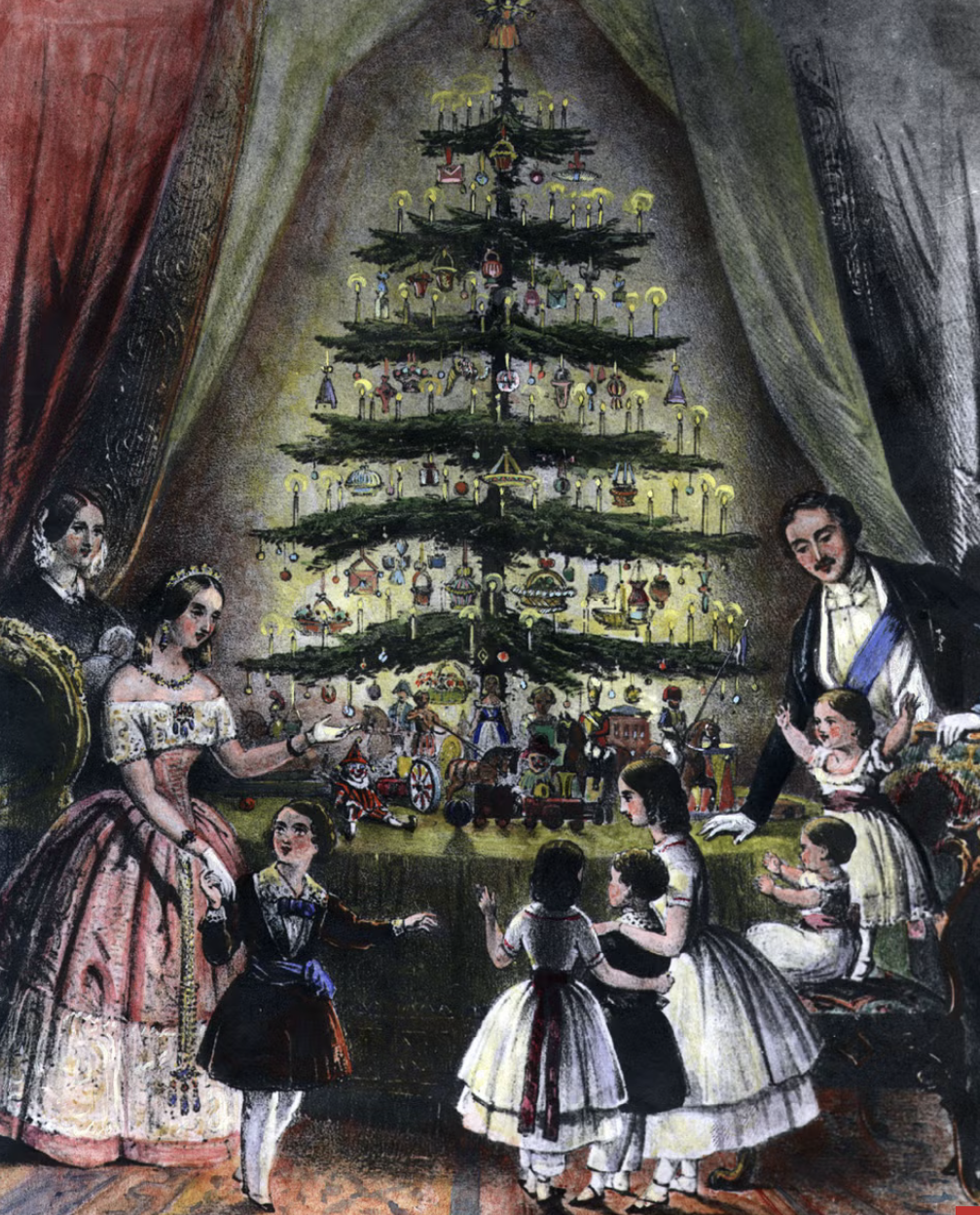
By the late 19th and early 20th centuries, the Christmas tree tradition had become firmly established in many Western countries.
The practice of using electric lights, artificial trees, and elaborate decorations became common. Today, Christmas trees are a central part of holiday celebrations in many cultures around the world.
As societies become more interconnected due to globalization, cultural practices often cross borders.
If the Christmas tree has evolved from ancient pagan rituals to a beloved symbol of the Christmas holiday, influenced significantly by German customs and popularized by royal figures like Queen Victoria, the adoption of Christmas trees in various cultures, including in predominantly Muslim countries, reflects a broader trend of cultural exchange and globalization.
The Christmas tree, originally a Christian symbol, has been embraced in various forms by people who may not identify with the religious aspects of Christmas. In many cases, the tree has come to symbolize the winter season, festivity, and communal celebration rather than its Christian origins.
In some Muslim-majority countries, the concept of celebrating « Winter Holidays » or « New Year » has emerged.
These celebrations may include the decoration of Christmas trees, lights, and other festive adornments. This trend can be seen in countries such as Turkey, Lebanon, and even parts of the Middle East, where cultural practices blend with local customs and traditions.
The secularization of holiday traditions allows individuals from different backgrounds to participate in festive activities without necessarily adhering to the religious significance. For many, the Christmas tree represents a time of joy, family gatherings, and community spirit, rather than a religious observance.
The global commercialization of Christmas has played a significant role in the spread of Christmas-related symbols and practices.
Retailers and companies often promote holiday-themed products, including Christmas trees, regardless of the cultural or religious context. This commercialization has made festive decorations accessible and appealing to a wider audience.
In various regions, the Christmas tree may be adapted to fit local customs and traditions. For instance, in some countries, people may decorate trees with local ornaments, colors, or symbols that resonate more with their cultural identity while still embracing the general idea of a festive tree.
As societies continue to evolve, the meaning and significance of such traditions may further transform, creating a rich tapestry of shared experiences but the Christmas Tree, enduring presence in holiday celebrations will always reflect its significance as a symbol of joy, hope, and the spirit of giving.