Enfleurage, a Beautiful Way to Capture the Scent of Flowers

Enfleurage

A Beautiful Way to Capture the Scent of Flowers
Have you ever wished you could bottle the scent of fresh flowers straight from your garden? Some flowers, like roses or lavender, can be distilled into essential oils, but others, like lilacs, gardenias, and jasmine, are too delicate for traditional extraction methods. That’s where enfleurage comes in—a centuries-old technique that allows us to capture the pure, natural fragrance of flowers in a way that no other method can.

The Enchanting Scent of Lilac
One of the most magical flowers to experience in spring is lilac.. As soon as its blossoms appear, the air fills with a fresh, powdery sweetness that feels both nostalgic and uplifting. Lilac has a complex fragrance—a mix of honeyed florals, soft vanilla undertones, and a slightly green freshness that makes it truly unique. Walking past a blooming lilac bush on a warm day is like stepping into a cloud of pure springtime bliss.
But as beautiful as lilacs smell, their scent is heartbreakingly fleeting. Once picked, their delicate fragrance fades quickly, and unlike roses or lavender, lilacs do not yield an essential oil through steam distillation. This makes enfleurage one of the only ways to capture their true scent and preserve their beauty beyond the blooming season.
Imagine being able to enjoy the fragrance of lilacs long after their short-lived bloom is over—whether in a perfume, a solid balm, or a scented oil. With enfleurage, you can do just that. This method gently absorbs lilac’s aromatic molecules into a creamy fat base, preserving its scent exactly as it exists in nature.
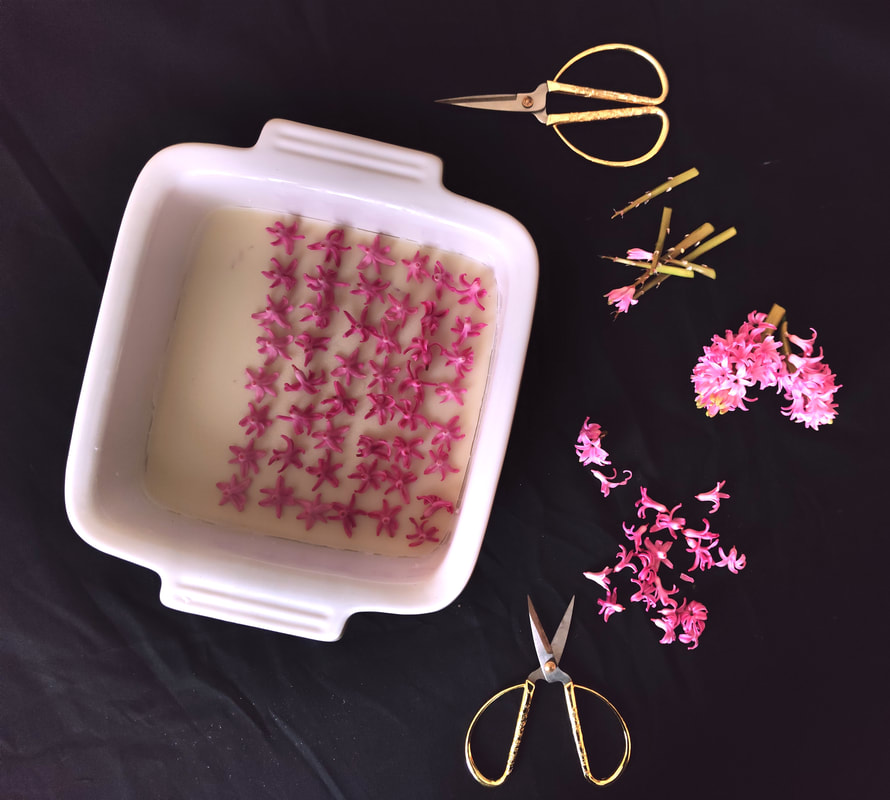
Lilac Enfleurage workshop

How Enfleurage Works
The process is simple but requires patience. Fresh lilac flowers are placed onto a layer of fat (such as refined coconut oil or a blend of vegetable waxes) spread across a glass or ceramic surface. The flowers are gently pressed into the fat, where they release their fragrance over time. Then the spent flowers are replaced with fresh ones until the fat becomes saturated with their beautiful aroma. This fragrant pomade can be used as-is or further refined into a tincture or absolute for perfume-making.

Want to Learn More? Join Our Courses & Workshops!
If you’re passionate about natural perfumery, we invite you to explore the Natural Perfumery Course and the Natural Raw Material Extraction Methods Masterclass where you’ll learn various extraction techniques, including enfleurage, maceration, tincturing, and distillation. These courses are designed for anyone who wants to deepen their understanding of natural fragrance creation.

And if you love lilacs, don’t miss our special Lilac Enfleurage Workshop this spring! This hands-on experience will teach you step-by-step how to preserve the enchanting scent of lilacs using traditional enfleurage. Whether you’re a beginner or an experienced perfume lover, this workshop will give you the skills to create your own botanical extracts.

Stay Connected & Subscribe!
Spring is the perfect time to start your journey into natural perfumery. Subscribe to our courses and workshops to learn the art of capturing nature’s most beautiful scents.

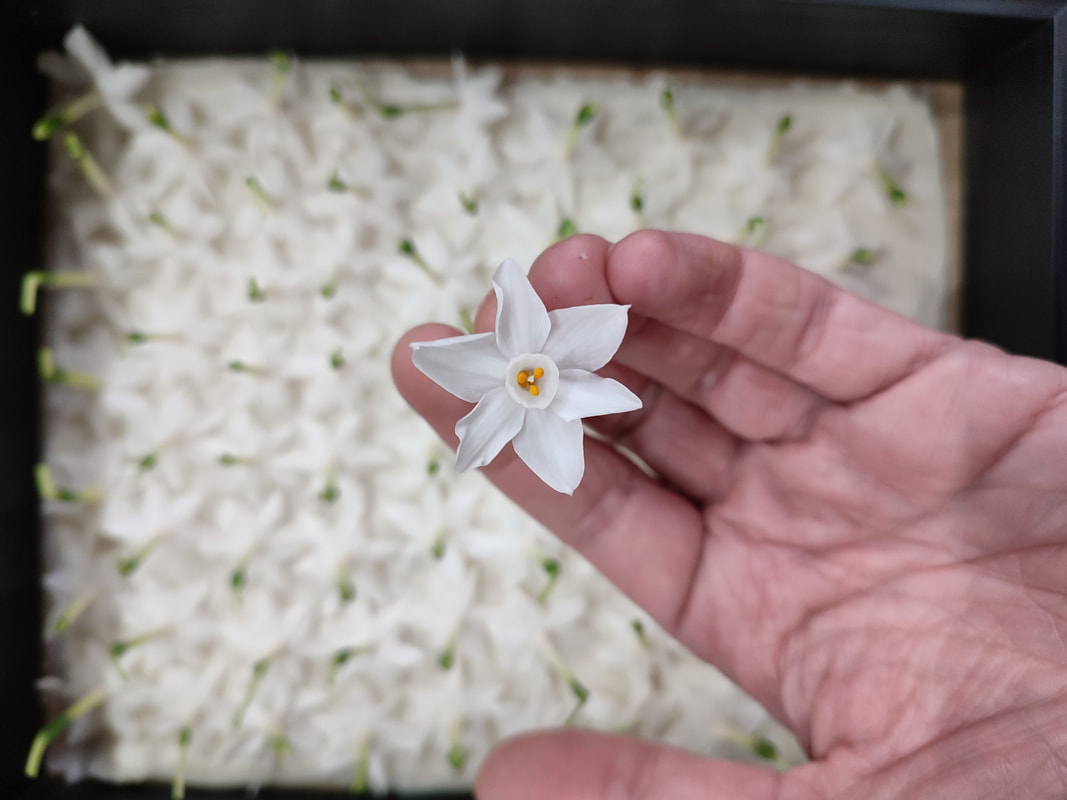
Lila Enfleurage Workshop

Contact

A journey into enfleurage

Enfleurage with Andrej Babicky

Capturing the Ephemeral
In the realm of perfume crafting, there’s an art to capturing the essence of flowers. Among various extraction methods, from distillation to maceration, one stands out for its enchanting approach – enfleurage. This method, despite being laborious, possesses a magical ability to imprint the olfactory fingerprint of a flower, making it a personal favorite.
The enfleurage process is both a journey and an experiment, much like the anticipation of spring when fragrant flowers are ready to bloom. Imagine stepping into your garden, balcony, or even just a sunny windowsill, armed with the intention to entwine the ephemeral soul of a flower into a fragrant masterpiece. For me, this is more than just a technique; it’s a dance with nature.
Enfleurage, contrary to its demanding nature, offers a playground for experimentation. Co-enfleuraging different flowers became my joyful pursuit, creating complex pomades that danced with the richness of jasmine, gardenias, plumeria, Stephanotis, Cestrum, banana leaves, roses, and even tomato leaves. This became more than an experiment; it evolved into a fragrant game, a symphony of scents.

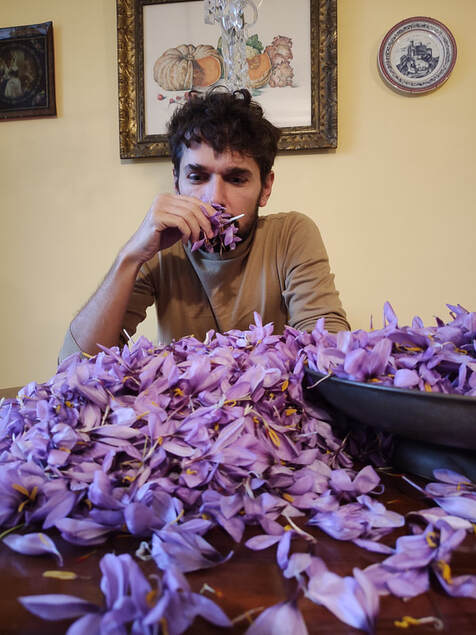
Enfleurage Extraction by Andrej Babicky at the Natural Perfumery Teacher

Over time, I expanded my palette, incorporating different raw materials into the pomade. Unrefined coconut oil, with its tropical aroma, became a base for enfleurage experiments, mingling with gardenias, plumeria flowers, bourbon vanilla pods, finely ground resins and iris powder. The result? A tapestry of new scents and the recreation of complex, unique bouquets.
The manufacturing process remains true to tradition. Glass or ceramic containers replace the classic chassis, vegetable butters and oils stand as the primary medium, and the delicate dance of changing flowers persists. Some of my enfleurages remain soaked in alcohol for months, allowing me to study raw materials practically, even if they never make it into a final composition.
In the historical context, enfleurage played a crucial role in the fragrance industry. Refined in Grasse, France, in the mid-1700s, it became an industrial center for essence extraction. Today, enfleurage is a mainly historical method, replaced by more modern techniques. However, with the resurgence of interest in natural perfumery, some perfumers revisit this technique, making modifications to suit contemporary needs.
Enfleurage is not just a process; it’s a celebration of flowers that might have limited essence or are too fragile for other extraction methods. It revolves around the absorption of volatile odorous molecules by fat. This fat, acting as a solvent, captures the essence of flowers it embraces.
The traditional procedure involves meticulously crafted frames, or chassis, where purified fat is layered, and flowers are evenly distributed. Daily changes and cycles of defleurage create a dance between flowers and fat, resulting in perfumed pommade. This pommade can then be turned into an absolute through further processing.

Learn Enfleurage with the Natural Perfumery Teacher

Enfleurage, despite its historical roots, remains a testament to the art of perfumery. It beckons us to dance with flowers, capturing their essence in a way that’s both magical and personal. In this intricate journey, where patience and experimentation intertwine, enfleurage invites us to create olfactory symphonies that resonate with the very soul of nature as it awakens in the upcoming spring, with fragrant flowers ready to bloom.

Embark on your own olfactory adventure! Explore the art of natural extractions in my Natural Extractions Course.

How to professionalize and structure your scent design for more ease and efficiency?

Françoise Rapp in her Natural Perfumery Laboratory

How to professionalize and structure your scent design for more ease and efficiency? 
The creation of a perfume is much more than an assembly of natural raw materials. Each natural essence each containing up to 300 molecules, their mastery in the composition of perfumes can prove to be perilous. A beautiful perfume is well thought out and inspired but above all well-constructed so that each ingredient is in its right place to better delight the senses. Being a natural perfumer requires different talents, both artistic and technical. Being a perfumer is a profession that can be learned, and it is important to master the fundamental basics if you want legitimacy.
How to organize your perfume organ and select quality natural essences is learned by mastering olfactory evaluations and by reading technical documents provided by suppliers. How to make and follow your stock, make accurate weighings, and above all learn effective methods which are real guides in the composition of a structured perfume.

Learn Natural Perfumery

Counting drops in the development of a perfume has no place.
You must do the weighings and learn how to do them well to design reliable and serious documents. From experience, I have met many natural perfumers who proceed with counting drops, and then often find themselves in the delicate position of not being able to produce their perfumes even on a scale of a few dozen bottles. In addition, they lose all legitimacy and seriousness during exchanges with other professionals. Most of them lack a technical mastery of weighing, working with automated calculation tables, and understanding the reading of technical documents of the raw materials with which they worked. One step was missing: that of a more in-depth method.
If you work without real knowledge of these aspects, there will always come a time when the harmonious business development of your company will be limited. This is why I have designed two effective methods and processes to deepen the fundamental bases of perfumers so that they can design natural perfumes of high olfactory quality with mastery. These two distinct methods are adapted according to distinct projects and inspirations as well. The HEART® and SPLIT® method have proven themselves over nearly 26 years of various experiments! The HEART® method, for example, is perfectly suited to so-called thematic perfumes whose inspiration is a raw material, an olfactory family for example. The SPLIT® method applies to so-called feelings, history, and memories projects. This last method helps to tell a story, to develop it even if the basis of a perfume is to take our client on an imaginary journey, this method will be more targeted in its structure for an effective rendering. Practicing and following these two methods not only allows you to build a beautiful perfume but also to magnify your first inspiration.

Learning Natural Perfumery

In the creation of a beautiful natural perfume, each step is important:
From the quality of the raw materials, to their selection for the project, to meticulous dosage formulations, and to the design of tools such as formulation tables to professionally preserve and ensure their successful development.
If you work as an independent perfumer for brands, this is another subject because you must communicate precise documents so that the formulas are easily reproducible by service providers.
This is how the Scent Design & Formula-Building masterclass brings all this mastery accompanied by many blank documents that you can use throughout your career as a natural perfumer. These are real supports in addition to two methods whose processes are clearly explained. This masterclass is suitable for all perfumers and natural perfumers who wish to go further in the professionalisation of their work and thus succeed in their passion.
 
Enroll now for the Scent Design & Formula Building Masterclass

Session opens each first Monday of the month. Next session opens on March 6.
Multiple payments available. 

The Chypre Accords

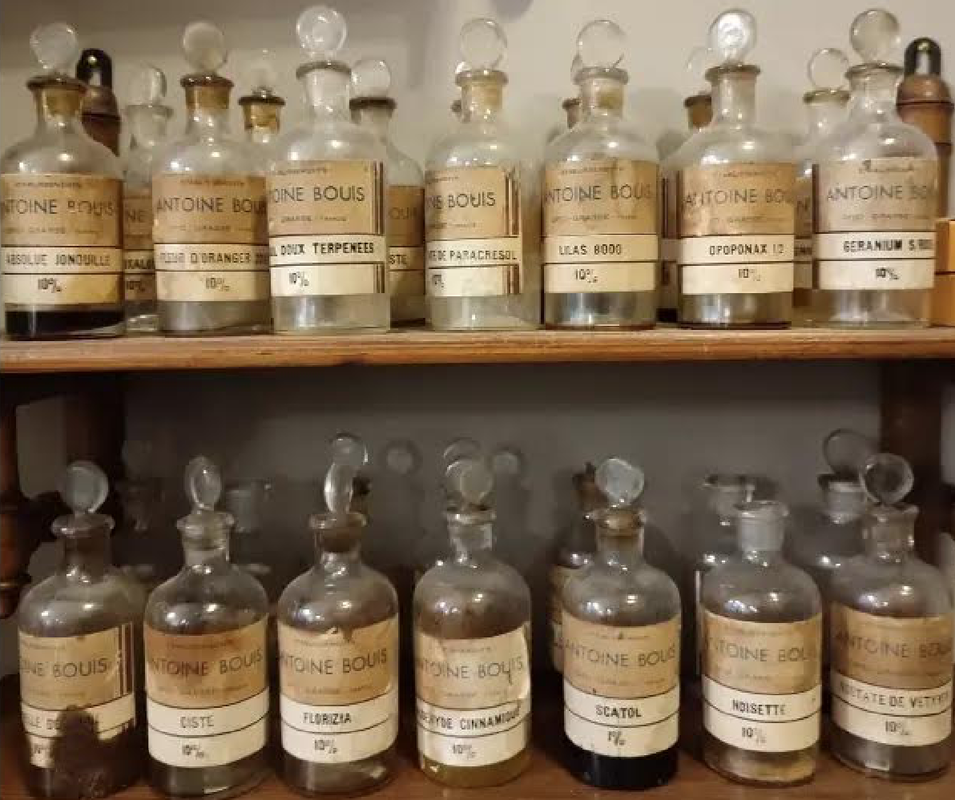
Old perfume bottles

The world of Natural perfumery is a fascinating one, with a rich history and an abundance of different scents and notes to explore.
One of the most iconic and well-known olfactory families is the Chypre family, named after the French word for the island of Cyprus. This island has a long history of association with perfumery, and it was once at the center of the perfume trade in the Orient, with its gloves scented with oak moss and the famous Oiselets de Chypre (Chypre Birds).
The forests of the Copper island (currently Cyprus) and its oak mosses, its Henna (Kypros), rose and iris oils, ointment boilers contributed to the fame of its perfumers. Their names were to the Master Perfumers: the ‘Kupirijo’ or ‘Cypriots’. 
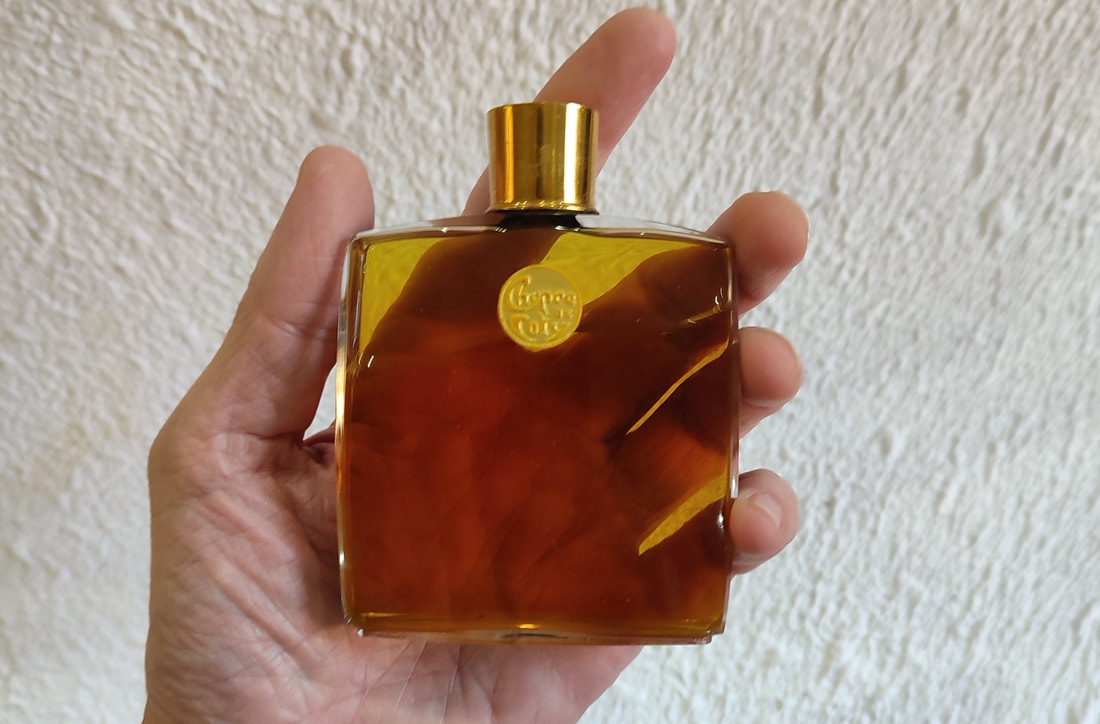
Historically, perfumes were considered a luxury item for the elite and their distribution was limited. However, this all changed in 1917 with the launch of François Coty’s Chypre. Coty’s Chypre had a significant impact on the perfumery industry and succeeded in remarkable publicity, giving a name to the whole olfactory family.

Chypre de Coty

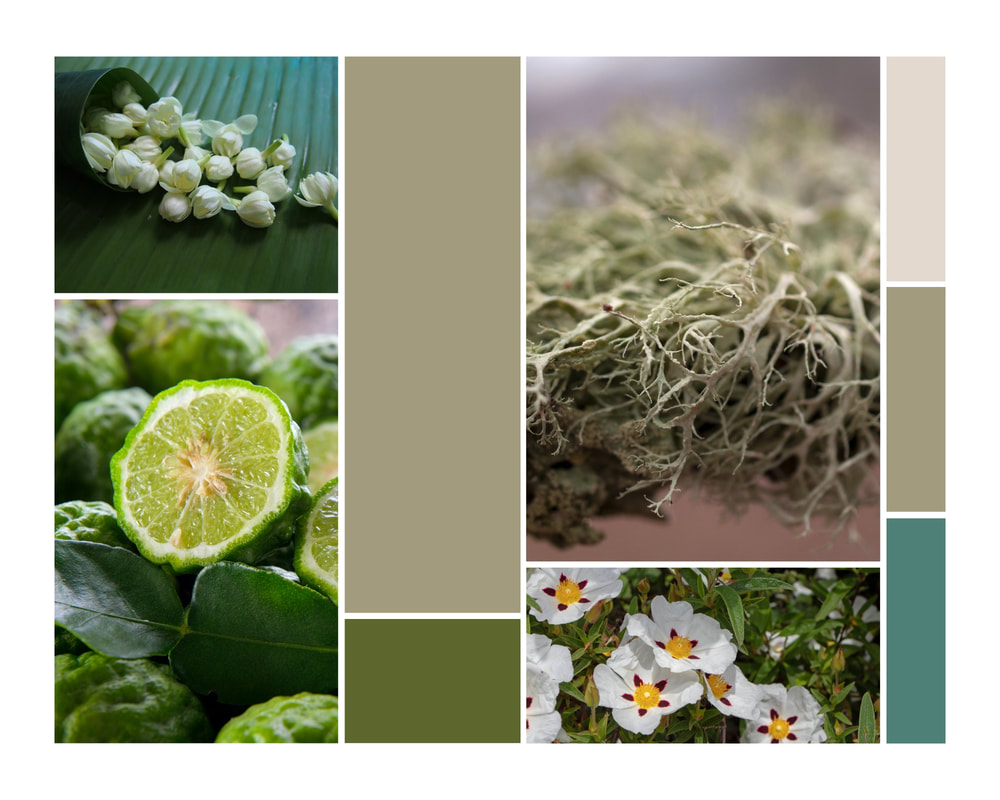
The Chypre accord, which is the core of a Chypre perfume, is based around bergamot, labdanum, floral notes, and oakmoss.
These different components work together to build the architecture of a perfume and define its main theme. The accord is then enriched by other notes, which are the facets of the perfume.
These fragrances are known for their intense base notes that can bring to mind scents of undergrowth and woods.
One of the most interesting things about the Chypre family is its adaptability to various interpretations. This allows natural perfumers to create unusual fragrances that are truly one-of-a-kind. The mysterious and charismatic character of natural Chypre fragrances makes them captivating and alluring, and it is this quality that has made them so popular over the years.
In addition to its adaptability, the Chypre family is known for its ability to evoke emotions and memories. The scents are able to transport us back in time and bring up memories that we had forgotten about. This is why Chypre fragrances are considered timeless and classic, and continue to be popular to this day.
The rich history of perfumery on the island of Cyprus and the impact of François Coty’s Chypre perfume continue to influence the perfumery industry to this day. 
The chypre family is a fascinating and iconic olfactory family that has a rich history and a wide range of scents and notes to explore. From the mysterious and captivating classic chypre fragrances to the more androgynous green chypres, or joyful fruity facets, there is something for everyone. 

Chypre Accords MasterClass

In our masterclasses, we will delve into the world of natural perfumery and the creative process that attendees will experience.
We will discover the different olfactory families and facets, their history, and some curiosities. We will also discuss the most representative fragrances and dedicate ourselves to the creation of fragrances and accords focused on a single olfactory family. These masterclasses are designed for individuals who have already followed the path of natural perfumery and for those who wish to deepen their knowledge in this field.
Starting from February with the Chypre masterclass, new masterclasses will be made available every month, providing an in-depth look at the practical aspect of creation and revealing the mysteries of natural perfumery. We will be inspired and amazed by the power of natural perfumery and the creative potential it holds.

I encourage you to join us in these masterclasses and experience the art and science of natural perfumery for yourself.
The masterclasses will provide a unique opportunity to learn, to explore your own creativity and sense of smell. The Chypre family of fragrances is just one of many olfactory families that we will be exploring in these classes, so even if Chypre is not your favorite family, you will have the opportunity to discover new fragrances and learn about different olfactory families.
So, come and join us in this journey of discovery and creation, and let us immerse ourselves in the world of natural perfumery together.