Fermentation vs. Biotech in Natural Perfumery

Primary fermentation of peaches grown organically in Southern California

When Nature Expresses Itself — and When Technology Steps In

Fermentation is responsible for some of the world’s greatest tastes and smells: from croissants to chocolate to coffee and wine, we have fermentation to thank for their aromatic development. In perfume, the tradition of cold-soak fermentation of oud chips has also been passed down through the generations in Bengal. 

Ancient perfume has been credited with being made in a vinegar base, but flower wine was much more common and more likely used as a perfume base, most notably in blue lotus Egyptian wine. What is certain is that fermentation has accompanied human beings in the transformation and preservation of aromatic materials for thousands of years.

Fermentation is the absolute expression of terroir, created with the very wild native yeast in the air, the perfect signature of place; this kind of biochemical alchemy has long been regarded as sacred across traditions. It contains the spark of life, and many believe that the story of the transubstantiation of Jesus as the alchemical transformation from grapes to wine is magical and profound. 

At Small Vines Winery in Sonoma during pinot noir harvest.

Finally, from an aromatic standpoint, fermentation when still liquid like in wine, creates something called a phenolic matrix. Terpenes, tannins, anthocyanins, volatile and non-volatile organic compounds express aroma through this matrix. While perfume pays little attention to the non-VOCs, they play an important part in the aromatic expression of wine or wine-based perfume. Part of the value of applying this for wine-based perfume is that it makes materials like organic saffron or local flowers more bioavailable and easier for the chemically sensitive, creating a truly « functional fragrance ».
For natural perfumery we are seeing the rise of synthetic materials made with the application of fermentation and people labeling them as natural. But they exist outside of the phenolic matrix, aka the chemical structure of wine.
Citric acid is often added to mass produced food products or grocery store wines, or even sometimes to save a wine after a less than perfect harvest. It is created through a microbial process, but lacks the finesse of natural citric acid, or « racy acidity » we taste and smell in Chablis or in a Meyer lemon.
Lab fermentation used by major ingredient companies can similarly be designed to produce specific aroma molecules. This is fundamentally different from allowing a whole flower, fruit or other botanical material to undergo spontaneous fermentation and the complex aromatic result. The microbes in wild ferments exist already on the grape or the flower that begin the transformation. With a lab made isolate often it is a manipulated yeast strain designed to create a predictable result every time, one with less complexity and more focused on a single compound. In wine we refer to this different focus as « manipulative » instead of the « allowing » of nature. 

Rachel Binder IPF Certified Natural Perfumer and Sommelier

Part of the training to become a sommelier involves blind tastings where we can identify the alpha ionone, the geraniol, the linalool that make up aromatic notes in wine. It is from those blind smellings that I really learned the aromatic difference between the lab made and the nature made when I placed isolates nearby to help study for exams. The rose in Barolo transcends, whereas the isolated molecule inhibits the ability to fully smell the wine. It is made from a different philosophy of biochemistry than the Barolo or the Champagne. 
As a sommelier, I have seen this relationship between fermentation, place and time expressed profoundly in wine.  In Burgundy we see wine cellars covered in moss and mold that has been developing since the 1300s, a living microbial history that contributes to the beauty of the wine and its aging process. This is not biotech, this is culture, history and the result of many generations’ sheer devotion to creating something beautiful in concert with the land.

Fermentation versus biotech in natural perfumery
In photo- far right perfume wine after primary fermentation ready to be transferred to barrel, alongside Barolo

The biotech claim is that through lab ferments they can create compounds that smell like something new or even a flower or fruit. Compared to the real flower or fruit, they are linear, loud and not of the same aromatic quality of something grown on land. The process of creating this so-called isolate often involves between two and six other chemicals, reageants and solvents, the final result still often containing trace amounts of BHT.  As the health world calls for less ultra processed foods, we can see in real time that both ultra processed foods and this industrial approach to “new lab made molecules” is creating a world of people who identify as chemically sensitive. Are we actually chemically sensitive, or are our bodies simply reacting to a new foreign material that our bodies don’t recognize?

An ad campaign showing women romping around an orchard claims that “through fermentation we were able to recreate the smell of a pear”, without ever supporting a pear farmer or having a relationship with that orchard. In the comments you see customers so excited to buy a natural product. All the while they are being sold an ultra processed synthetic product with a small amount of naturals. “Natural washing” is all around us, and it is time that we recognize that synthetic things can be produced without being in a base of petrochemicals or other kinds of synthetic scents such as those produced from renewable feedstock.

As an artist who works with champagne technique  (« Method Traditional ») to make perfume, the slow process of working with living perfume made with peaches and flowers, time, patience and faith is dramatically different than procuring a lab-made molecule that is identical every time and is not born of the land or seasons.
A real pear contains an extraordinarily complex mixture of aromatic compounds shaped by variety, soil, climate, ripeness, harvest and storage. The chemical composition shifts depending on ripeness. A molecule produced through biotechnology may reproduce one component or facet of that aroma, but it does not contain the botanical complexity of the fruit itself. It is still an impersonation of peach, as opposed to the peach itself.
In my opinion the fermentation of fruit and flowers is the highest expression of nature, the ferment being the most ancient preservation technique allowing these precious materials to live and evolve for many years to come. It is the only true way to capture a perfect summer season into a bottle that can be returned to a decade later so that we may feel the vibrancy of that one special season. 
Natural Perfumery Summit Houston: Strategies for Making the Most of Your Attendance

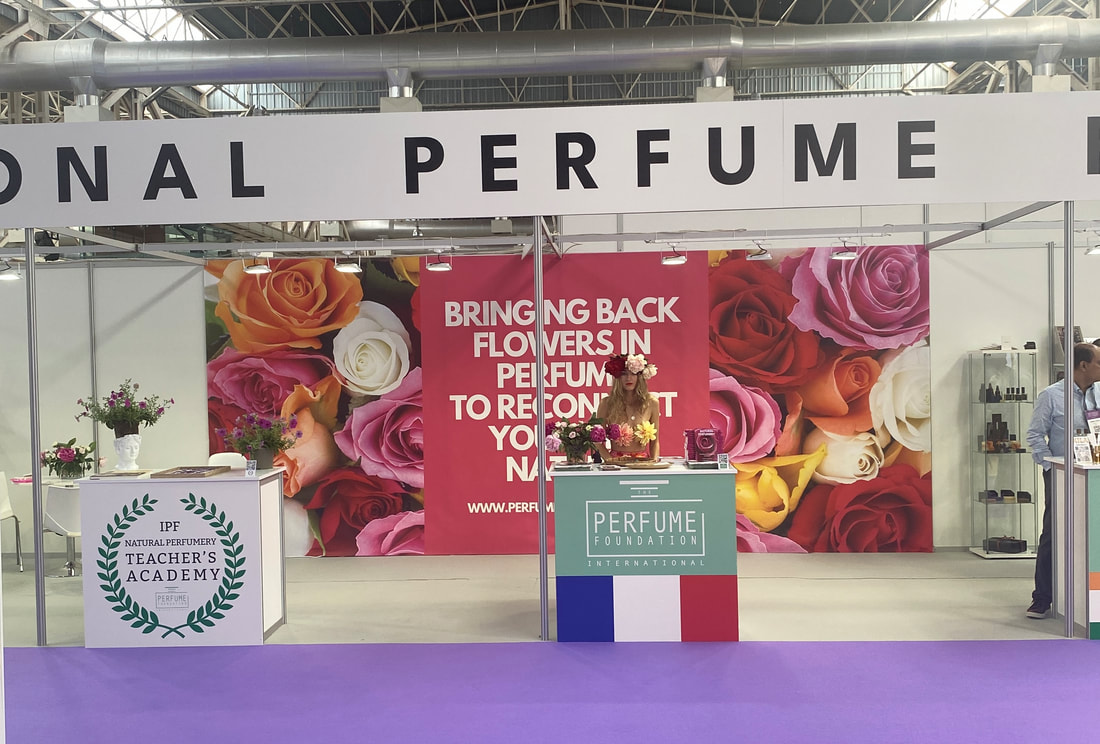
IPF in Barcelona

For those Natural Perfumers who are attending or contemplating attending the trade event in Houston, Texas August 14-16, here are three event strategies that can make your participation a complete success!

1. Develop a pre-event plan

  • The number one strategy for event success is the use of business cards, both yours and everyone you speak with at the event. Bring plenty of cards and don’t be shy about handing them out.
  • Find out as much information as you can about who will attend the event. Consumers?  Media?  Students?
  • Develop distinct messages for whomever you think will be there. 
  • Develop a plan that will allow you to have a successful event even if you talk very few people there. More on this later.

2. Maximize the use of time spent at the event

  • Remember, you are at the event for business and for no other reason than supporting your business’s success.
  • Qualify everyone you speak with before you begin your presentation. Why are they there?
  • Give your business card to whomever you speak with. 
  • Get a card from every business or media person you connect with inside or outside the booth. If they say they have no card, write their name and contact information on one of your cards. Make quick notes on the back of their cards about what was discussed.
  • At the end of each day, review each card and make notes on what follow-up will be needed.


3. Complete the after-event follow-up

The most under-appreciated but necessary key to event success is the strategy of after-event follow-up. It always amazes me that this most important event strategy is nearly always neglected or entirely forgotten. It probably has a lot to do with people returning from a trade event having to catch up with things put off by their event attendance. Even so, proper follow-up has to be immediately scheduled and completed within one week of returning, since the effectiveness of proper follow-up rapidly declines over a very short period of time. Here are a few suggestions to get the most out of your follow-up strategy:

  • Keep every business card you get. Decide which people should be immediately contacted, but don’t throw any cards away. You never know when someone you spoke with at an event will become important to you later on.
  • Follow up every event sale with a personal note thanking them for their purchase.
  • Write a “Sorry we missed you letter” explaining how great you did at the event and what they missed. It doesn’t matter if they intended to attend the event or not.
  • Write a blog or article about your event attendance, which is an act of leadership that will build consumers’ trust if you let them know.
  • Now, about having a successful event even if you talk very few people at the event: what most people fail to realize is that more sales can be made after the event than at the event. At an event, people are pressed for time since there is a lot for them to see. After the event, you can contact or message not just those that were there, but those that weren’t there as well.

These are proven strategies can make your event attendance less stressful, knowing that you will be immediately following up and making your event a complete success!

Please email me at [email protected] with any questions you may have on successful event management. IPF is here to help!

Spring Marketing Strategy for Natural Perfumers: Growth, Supply Chain & Competitive Advantage

Spring is more than a season, it is a strategy

Finally, we are emerging from winter’s cold and doldrums, and now we can begin embracing the positive spirits of transformation and renewal – giving Natural Perfumers significant marketing differential advantages.

Spring can provide us with these key lessons:

  • Embracing Renewal & Growth: Just like plants developing and flowers blooming, spring represents personal and business transformations, discarding old habits, and starting fresh with newly discovered knowledge and energy.
  • The Power of Patience: Because transitions are gradual, spring teaches that meaningful growth takes time, consistent effort, and trust in the process.
  • Resilience & Hope: Spring arrives after the coldest days, symbolizing that warmth and life will return, encouraging positive outlooks within yourself, your suppliers, and consumers. 
  • Letting Go & Decluttering: The « spring cleaning » tradition applies both mentally and emotionally, encouraging us to clear space for new opportunities to present themselves.
  • Taking Action: It is a time to plant seeds—both literally and metaphorically—by setting goals and taking action on new marketing projects.

For those wishing to have a better understanding of marketing, compare it with growing spring flowers properly from germinations, to seedlings, to robust plants, and finally, to colorful flowers. Each stage of plant development is like a link in a supply chain, with each stage completed using optimum flower growing standards to produce superior and sustainable blooming plants.
Like spring flower growing, marketing also involves understanding the complete supply chain from production to processing, to distribution, to consumer purchases, consumption, satisfaction, and repurchases. Each link has a responsibility to add value and then pass on that added value to the next link: all to maximize consumer satisfaction with our natural essence products.

Here are some thoughts that can help you Spring Forward this year:

  • Balance the need for internal goals and direction with external needs as well.  Your business purpose and mission are vital, but so are other links in the supply chain. Improve your knowledge of sourcing and then link what you’ve learned to what current consumers’ current purchasing priorities are, including products that can give consumers healthier lifestyles.
  • Increase your knowledge of the value of your suppliers to consumers. Every source of natural products should also be sources of valuable information you can use to better tell your story to consumers. Supply chains are like living things that need to be continuously cared for and improved to better satisfy consumers and deliver profitable sales.                             
  • Take advantage of IPF’s growing momentum aligned with education, wellness, sustainable sourcing, supply chain standards, and visual storytelling with emotional connectivity to Natural Perfumes.                                                                                                                                                                      

IPF’s Natural Perfumery Teacher’s Academy is full of opportunities to Spring Forward armed with superior knowledge and renewed energy to help you better compete in the marketplace.

What is Natural Essence Marketing

Essential Oil Marketing

I recently reviewed a website (I won’t reveal which one to avoid embarrassing them) who had this definition of Natural Essence marketing:
“Marketing is a bizarre science that consists of the study of the process and the motivations that make human beings do something that no other living creature does: buy things, the end aim of all economic activity.”
There is really nothing correct about this statement.
What this author (as well as many others in natural essences) is really talking about here is “selling” not marketing. Selling is part of marketing, but marketing is a much more complex process including:

  1. Understanding marketing’s role and responsibilities within the company’s purpose/vision, mission statement, and business plan
  2. Determining what consumers are or should be interested in with Natural Essences
  3. Using a consumer-centric mind-set in sourcing materials, stories, and supplies
  4. Determining the appropriate marketing mix of products, prices, and promotions
  5. Educating, informing, and selling consumers who demand more but are willing to pay more if those demands are met; and, if they are satisfied with the performance of the product, will return for more purchases, develop brand loyalty, be open for brand extensions, and even develop brand advocacy–all for a lifetime.

The author above focuses solely on marketing  “making” a customer “…buy things, the end aim of all economic activity.” Wrong!   Selling is merely the first step and, without product satisfaction at the point-of-consumption (POC), it will likely be the last step.
The true “end aim” of economic activity for Natural Essences should be helping millions of new consumers understand the importance and value of making Natural Essences part of their daily lives for a lifetime.
 
If you want to learn more about marketing, enrol for Terry Johnson’s Business and Marketing course

Business Spring Cleansing

Perfume business

Green buds are finally appearing here in the Mojave Desert, a sure signal that spring is on its way! Temperatures are slowly rising, which means much more time outdoors but also reminding us that it is time for some serious Business Spring Cleaning.

Here is my spring-cleaning list of things to do:

1. Dust Off Your Business Plan
When was the last time you reviewed your business plan? If your business plan has been collecting dust, spring cleaning is a great time to give it the attention it deserves. Instead of a one-time exercise, think of your business plan as a tool that can help you reevaluate how you’re doing and where you are in your business. As small businesses constantly develop and change, unexpected things happen, and your business plan needs to adapt to these changes.  

2. Brush Up on Your Vision, Mission and Value Proposition
These important business tools are mechanisms that keep businesses continually focused in the right direction. Does everyone working with you within the natural essence supply chain thoroughly understand them including employees, your accountant, lawyer, banker, suppliers, and customers?

3. Do a Full Sweep of Your Customer List
As a small business, your customer list is likely one of your most valuable assets. Are you nurturing and caring for those customers as best you can, or are the responsibilities of running your small business keeping you too distracted? Spring is a great time to check in with customers, past and present. For those you haven’t served in some time, see if they need your services again. While cleaning up your customer list, you can also make a list of potential customers and try to secure new business. Remember, in these post-covid times everyone needs natural essences now more than ever.

3. Scour Your Books
Spring is when many small business owners are already getting their financial paperwork and tax documents in order, but it’s also an opportunity to take a step back and do a financial inventory. See where your business stands, review your revenue and expenses and identify areas where you can save. That could even include evaluating your current accounting processes to see if there are ways to make them more efficient. 

4. Clean Up Vendor Relationships
As part of your spring cleaning, take some time to reconnect with your various vendors to express how important they are to you and how you can work together to improve and develop even more valuable relationships going forward.

5. Spruce Up Your Marketing Strategies
Marketing is vital to any small business, and spring is the perfect time to examine and spruce up your marketing strategies. Like your business, marketing tactics are constantly changing, so you must consistently improve your marketing plan. You might research new marketing trends, take a deep dive into social media, or set up new marketing technologies . What marketing efforts are producing the best results? Consider eliminating and replacing any marketing strategies that have not resulted in expected revenues. 
Spring is a wonderful opportunity to refocus, reevaluate, and strengthen your business going forward for the rest of the year.

If you need assistance for your perfume business, follow Terry Johnson’s course: Learn Business and Marketing in the essential oil environment.

Design Fragrance Branding beyond cost worries

Designing fragrance branding

Empowering Fragrance Creators to Build Timeless Legacies Through Art and Craftsmanship with an Exciting New Course Collaboration.
I am excited to collaborate with the International Perfume Foundation making fragrance packaging design accessible, timeless, and emotionally compelling.
In this collaboration, we are developing a course that combines craftsmanship, art, and branding to help you create a visual story for your fragrance. Together, we’ll empower you to transform your ideas into a brand legacy that aligns with natural perfumery values—all without breaking the bank.

The Challenge of Costly Branding
The world of fragrance branding often demands significant financial investments, with design service packages ranging from $50,000 to $150,000 and even more with production costs. However, we believe in democratizing this process, equipping you with knowledge and materials to create a brand experience for your fragrance—one that can evolve for decades and build your legacy.
Through this course, we will show you how to incorporate craftsmanship and art into every aspect of your fragrance branding, from naming and storytelling to visual design systems and packaging. The materials and techniques you’ll learn will provide you with a foundation to build upon, refine, and expand over time, ensuring your fragrance brand is timeless and resonates with your audience.

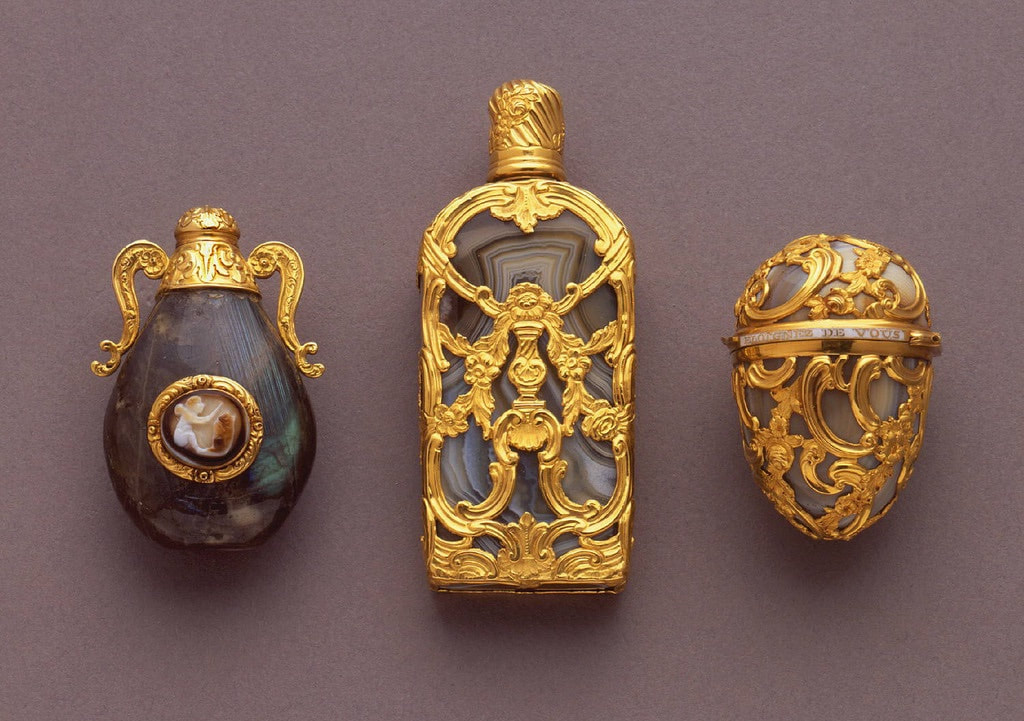
Roccoco packaging

My Journey: Crafting Design that Stands Out
My fragrance packaging journey began at Pratt Institute, where I studied fragrance packaging design under the legendary Marc Rosen, a pioneer in fragrance design. I found my passion for creating innovative and emotional branding during the Great Recession, a time when businesses cut budgets and designers needed to innovate with limited resources.
During that time, I developed branding solutions for products using stock components while working with manufacturers in the beauty industry, creating luxurious designs that stood out on shelves without the need for custom manufacturing. This was during the rise of the Masstige movement, which brought accessible luxury to consumers. I discovered the power of graphic design to elevate product design, making them feel not only premium but also deeply personal.
Today, I’m channeling that experience into empowering fragrance creators. Our vision is to make perfume precious again, where each packaging design stands like a model on a runway, capturing attention and connecting emotionally with memories, heritage, and people.

Fragrance Branding Course

What This Course Offers
This course will help you bring craftsmanship and artistry into your fragrance branding while honoring the principles of Natural Perfumery. You’ll learn to create a visual identity that reflects the essence of your fragrance and resonates deeply with your audience. By the end of this course, you will have a complete visual package for your fragrance (no graphic design tools or skills needed), including the knowledge and materials to evolve and grow your brand. You will learn to build your fragrance as a collectible masterpiece, aligned with the artistry of natural perfumery to connect emotionally with your audience.
This isn’t just about branding now—it’s about creating a legacy. The materials and techniques you learn in this course will be tools you can use for decades to refine and build your brand.

Why This Matters
Fragrance is more than just scent—it’s a story, a memory, and an experience.
Your branding, story and packaging design elements should reflect that emotional depth while honoring your craftsmanship and your individuality. This course will show you how to make your fragrance feel precious and personal, creating packaging that serves as a work of art on a podium.
We are here to help you connect with your audience through design and storytelling, leaving you with tools to build a brand that resonates today and stands the test of time.
Let us help you craft something timeless together.

More info about the course 

Delegating Team Responsibility

Delegating Team Responsibility

When most natural perfumers start perfume businesses, there is generally only one person involved doing every business activity. This means all responsibility and authority rests with one person. If a one-person business is the plan, then all is fine. If, however, a natural perfumer wants to take full advantage of the growing consumer interest in natural perfume or natural aromatherapy and significantly grow their business, they will have to make the decision to develop a team to professionally carry out all of the growing business functions. 

Here are some fundamentals every growing company needs to consider on team delegation:

1. Make careful choices for every person added to the team, including looking for indications of experience in team play. For example, ask if they have ever played on a sports team and  enjoyed it.  

2. Ensure each member of the team thoroughly understands the company’s Mission, Purpose/Vision, Value Proposition, and policies, and how important their job is in fulfilling these fundamentals. Develop a company manual containing these fundamentals and policies and give the entire team regular access to them, reviewing the manual with everyone periodically.  

3.  Assign each team member’s responsibilities with some appropriate authority. It is quite easy to delegate responsibility without authority – just tell one of your team to do something. It is not as easy, however, to properly delegate responsibility that includes authority. Delegating responsibility without authority can result in failure, team disengagement, and even resentment, and is also known as « dysfunctional delegation. » Proper management practices necessitate clearly stating the lines and limits of each team member’s authority and responsibility.  

4. Review each team member’s job performance and knowledge of fundamentals periodically and continually re-focusing on your team regarding your purpose, mission, and value proposition. This keeps the entire team on the same page.  

5. Manage the team with balance between ignoring or hovering, and monitor team performance without undermining employees. Remember, team members may do things a bit differently than you would do yourself, but that is part of the give-and-take nature of team delegation of responsibility.

Want to learn more about operating a business and marketing natural perfumes and essential oils?
Sign up for Business and Marketing in the Natural Essence Community.

Power Marketing

Natural Perfumery Power Marketing

In the vibrant world of perfumery, new brands and budding perfumers often find themselves looking toward established giants like Chanel for inspiration. However, it’s crucial to remember that these iconic brands have spent decades cultivating a rich cultural legacy that goes beyond just the fragrance itself. Consumers are drawn to these brands not only for their scents but for the stories, emotions, and the status they represent. In contrast, the realm of natural perfumery offers a unique opportunity for emerging brands to carve out their niche and promote powerful brand differentiation  through authenticity, effective storytelling, engaging senses, deep connectivity to sustainable ingredients, and strong community relationships.

The Importance of Authenticity
In today’s market, consumers are increasingly discerning, prioritizing transparency in the products they purchase. Natural perfumes, which often contain sustainably sourced ingredients, resonate with health-conscious consumers seeking authenticity. Brands can leverage this by being open about their sourcing practices, ingredient origins, and production methods. This transparency not only builds trust but also creates stronger emotional connections with consumers who value sustainability and ethical practices.

Crafting Compelling Stories
Storytelling is a powerful tool in marketing, particularly for natural perfumery. Each fragrance has  stories to tell, be it the inspiration behind the scent, the journey of its creation, or the cultural and significance of the sustainably created ingredients used. By weaving these narratives into their branding, new perfumers can create a rich tapestry that engages consumers on deeper, emotional levels. This approach not only differentiates their products from mass-market offerings but also fosters a sense of community and shared values among consumers.

Engaging the Senses
Natural perfumes are unique in their composition and often offer sensory experiences that differ vastly from synthetic fragrances. Power Marketing strategies should emphasize the sensory journey of product: how they smell, how they feel on the skin, and even the emotions or states of wellbeing they evoke. Engaging consumers through sensory experiences can be achieved through various mediums, including samples, immersive store displays, and tailored online experiences that allow potential customers to explore the fragrances in meaningful ways. 

Natural Perfumery Marketing

Building Community Connections
Community engagement plays a pivotal role in the Power Marketing of natural perfumes. By fostering connections with local artisans, suppliers, and even consumers, brands can create  strong support networks that enhance their authenticity. Hosting workshops, pop-up events, and collaborations with like-minded brands can help engage and build loyal customer bases that feel personally invested in the brand’s success. This sense of community not only promotes word-of-mouth marketing but also reinforces the brand’s commitment to ethical and sustainable practices.

Finally, as the natural perfume market continues to expand, Power Marketing will be crucial in distinguishing new natural brands from their more established synthetic counterparts. By embracing these power principles, new perfumers can effectively resonate with a growing consumer base that prioritizes sustainability, health, and emotional connections in their purchasing decisions. With a thoughtful approach to marketing, the world of natural perfumery holds immense potential for innovation, creativity, and meaningful consumer relationships for a lifetime.
Focusing on these core Power Marketing elements will provide new brands in the natural perfumery space with the tools to set themselves apart and thrive in an increasingly competitive market.

If you want to know more about marketing your perfume our your essential oil business, enrol for Terry Johnson’s Business and Marketing course.

Consumers for Life

Natural Perfumery Business

Over the years, many perfumers have told me why they got into natural perfumery in the first place. Many have shared their personal experiences with having allergic reactions from synthetic perfumes or colognes, leading them to create natural perfumes for themselves. Others have said they enjoy the creative process of producing perfumes from natural materials. 
Regardless of how perfumers find their pathway to natural perfumes, from a business and marketing perspective it is not enough to only rely on internal experiences and policies to ensure business success. 
Yes, all natural perfumers need motivation, missions, visions and other important internal business practices, but more importantly, they need to balance their internal needs with an external focus on identifying, selling, and keeping Customers For Life. 
So, how can natural perfumers create Customers For Life (CFL)?

Improvements at Points-of-Sale and Points-of Consumption with CFL Strategies
Whether online or brick-and-mortar, points-of-sale are the interfaces between the entire supply chain and customers. Improvements to this critical touch point increase the likelihood of a profitable sale. Points-of-consumption are an even more important touch point, since it is here that customers determine product satisfaction and make the decision to repurchase or not. 
Approaching natural perfume marketing from a Customers For Life perspective positively changes the dynamics of points-of-sales and points-of-consumption strategies completely. For example, when natural perfumers decide to attend sales-related events, they should use CFL strategic mathematics: Each $200 perfume sale at an event + 1-$200 follow-up sale per year for 20 years = 21 CFL perfume sales or $4,200.  This strategy promotes proper follow-up from sales, which is typically a weak point in natural perfume marketing.

Be a lifetime Student and Teacher.
Never stop learning and then teaching customers, potential customers, and the rest of the supply chain. Learn more about your suppliers, gather as much information as possible from them on the value of their business practices and the products they supply, and then teach that knowledge to your supply chain community including consumers. 
No better place to share this knowledge can be found than IPF’s 2025 Natural Perfumery Summit, where besides gaining valuable exposure for natural perfumers’ businesses at IPF’s collective booth, perfumers can pass on CFL strategies to suppliers, distributors, the media and all others withing the natural perfumery community. Everyone in the supply chain benefits from a Consumers For Life strategy.

Instill Consumer Confidence and Trust in Yourself, Your Company, and Your Products
Natural perfumers wishing to get customers continually coming back for more products for a lifetime need satisfied customers who trust and have confidence in the products they purchase. This means demonstrating that perfumers are the experts in the communities they serve, and writing articles about your experiences is one way to do that. You can even submit those articles to IPF’s Newsletter that will be read by thousands in the supply chain. Participating in the New Luxury Awards is another opportunity to be recognized by your peers as an industry leader.

Customers For Life requires a complete commitment from natural perfumers to establish and maintain long-term relationships with every customer they sell. Keep in mind that it will always be a lot less expensive to keep customers for life than to acquire new ones.

Learn more about Terry Johnson’s Natural Perfumery Business and Marketing Course

Use your Passion to Turn a PUP into a Prize

Natural perfumes

“Precious Things are Without Value to Those Who Cannot Prize Them.”
  The Rooster and the Jewel-Aesop’s Fables

After talking to Natural Perfumers or reading their website content over the years, its completely clear to me that Natural Perfumers are universally passionate about their perfumes. And why shouldn’t they be?
Fine Natural Perfumes, like fine wines or fresh flowers, are truly alive and precious – each in its own way!
Yet, many potential Natural Perfume consumers act like the rooster from the Aesop’s Fable above: Upon finding a jewel on the ground, the rooster declared that he would rather have a single grain of barley than the jewel. The lesson for Natural Perfumers? Consumers will always purchase what they consider valuable and meaningful to their lives.
The challenge for Natural Perfumers today is to use the same passion they applied in creating their Precious Undervalued Perfume (PUP) into developing a Perfume Value Package that will be appreciated and prized by consumers for a lifetime.

So, how do Natural Perfumers turn their “PUP” into a Prize?  Here are some suggestions:

  • Let consumers see your beautiful perfumes as they really are. This means using clear glass bottles, rather than colored or non-transparent ones.


  • Put your passion to work on developing perfume bottles that will be treasured by consumers.


  • When considering the sizes of Natural Perfumes to sell, keep in mind the passion and effort you went through to create your treasures using precious (and increasingly expensive) natural raw materials. Think of your perfumes as nature’s jewels and focus more on smaller-sized bottles, such as 10ml, 30ml, and perhaps as much as 50ml but no more. Consumers greatly value unique, small treasures they can proudly display, and you will be deftly differentiating your perfumes at the same time.


  • Price your precious perfumes from the value and meaning they represent to consumers. Most Natural Perfumes I have encountered are underpriced, sometimes greatly so. Most times the problem is because Natural Perfumers have a Precious Undervalued Perfume (PUP) and the only way they can sell a PUP to consumers (who aren’t aware of the total value of the perfume) is by pricing on the low side. This is why perfumers need to add significant value to their Perfume Value Package and then communicate and sell that added value to consumers at premium prices befitting a prized jewel.
  • Help consumers enjoy and be satisfied with the consumption of your perfume. For instance, how should they display and store your perfume? Like wine and fresh flowers, perfumes prefer cooler places with no direct sunlight. Consumers will appreciate the value of helping them enjoy the use of your perfumes. It is at this critical point-of-consumption where consumers decide whether to return for more.