What Every Natural Perfumer Should Know About the Sacred Origins of Perfume
Healing Gods, Goddesses and Sacred Plants Across Ancient Civilisations
Since the dawn of civilization, humanity has looked to nature not only for food, but for healing. Long before modern medicine, flowers, aromatic herbs, resins, and trees were considered sacred gifts from the divine. Across continents and cultures, healing was often entrusted to gods and goddesses who revealed the medicinal power of plants, teaching humanity that true wellness comes from living in harmony with nature. Although each civilization gave different names to these divine healers, they all shared a common message: the Earth itself is our first pharmacy.
Understanding the sacred origins of perfume helps every natural perfumer reconnect with the true purpose of fragrance. Read the full article on the International Perfume Foundation website.
He-Sian-Zu: Ancient Chinese Perfume Beads & Healing
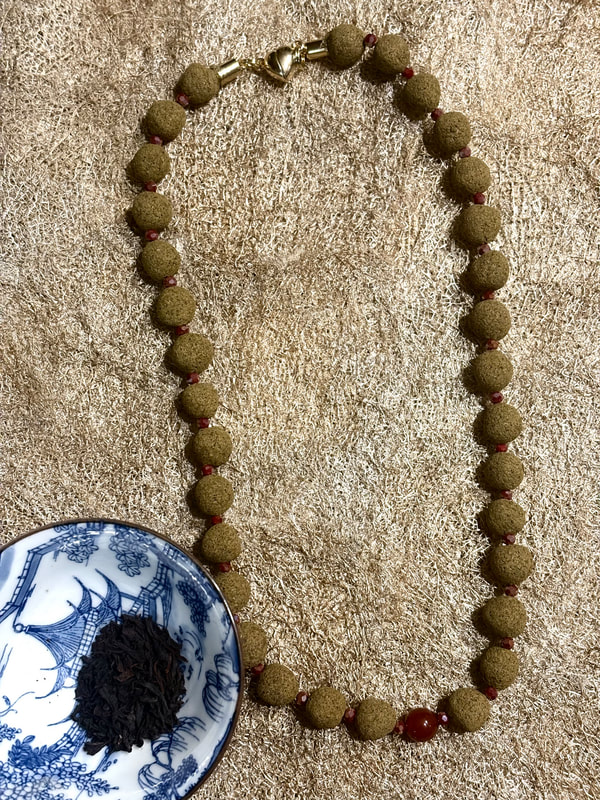
Ancient Chinese perfume beads were more valuable than gold. Jewelry made from the perfume beads were worn by all emperors and the wealthy. Due to the high cost of the perfume bead jewelry, the beads were rare. Today, the art, processes and medicinal history of Chinese medicinal beads are almost extinct.
Here is a little history of why the perfume beads or He-Sian-Zu are so valuable. More than 2,200 years ago, during the Qin Dynasty (ruled by the first Emperor who built the Great Wall), there were many wars and epidemics. However, people found that in areas where there were wild scented plants growing, fewer people became ill. Since they did not understand the reason why scented plants were so protective, they worshiped these plants during ceremonies and used them to show their gratitude for the gods who had provided these healing plants.
During the Han Dynasty (206 BCE), the Silk Road was built as a trade network connecting China with Persia and the West. This trade network facilitated economic and cultural exchanges, which resulted in more precious scented botanicals being brought into China. Also, during this same time period, the Traditional Chinese Medicine framework was firmly established, and the oldest Chinese medical text (Huangdi Neijing) was compiled. In addition, the uses of herbs and other medicinal substances were recorded to set a basis for pharmacology.
The development of scented plants and resins in perfume beads were more refined and developed. Later during the Tang Dynasty (618 AD), the golden age of Chinese economy and culture, Buddhism spread quickly. The Silk Road expanded to Southeast Asia. Many of the imported and beautifully scented woods and plants became widespread within Chinese Medicine and with perfume beaded jewelry. The Buddhist monks wore them and held them in their hands when they meditated.
Wearing perfume beaded or carrying scented sachets were almost a dressing ritual that lasted for thousands of years. People learned and strongly believed the scented botanicals provided protection and healing for their health. Many of the plants listed in Chinese pharmacology texts were scented plants. For example, Oud, Sandalwood, and roses were widely used in these perfume beads. Their scents have the effect of warming to facilitate circulations and smooth movement of Chi (energy). They also calm the nerves and mind to reduce stress and clear the mind.
Chronic stress increases cortisol production and causes multiple health issues. Moving blood and Chi helps stimulate the immune system to combat and to heal damage. Traditional Chinese Medicine promotes and emphasizes health ‘Prevention’. Wearing perfume beads made purely from scented plants, woods, and resins was a way of protection and prevention of illness and stabilizing mental and emotional health. Unfortunately, we are losing this ancestral hand-crafted ‘medicine’ using a composite of pure plants and resins to make a wearable to protect our physical and mental health. What we see in the markets are mostly wooden beads with chemicals or essential oils added to them.
Ancient perfume beads were made from the finely ground dust of healing, scented botanicals. The composition of each particular plant chosen was well considered and designed for different weaknesses or illnesses. The ancient, scented perfume beads had a purpose and lasted a very long time. I wanted to retrieve this ancestral medicinal art/skill back, so I studied the ancient processes and hand-rolled a variety of perfume beads from resins and plants from which I had collected and harvested. I found the process very meditative and meaningful. When I wore the necklace, the release of continuous and gentle scent lasted all day. The heat from my body moved the consistent, healing scents to my face.
Iinvite you to the Ancient Chinese Perfume Beads Master Class where this rare ancestral knowledge will be shared and brought back to life.
Taiwan in Scent and Time
Taipei Palace Museum: Incense burner with openwork design in wucai polychrome enamels. Qing dynasty, Kangxi reign (1662-1722)
A Fragrant Journey Through History This month, we travel through Taiwan’s perfume heritage — an island where fragrance and memory have long intertwined: from the cool breath of camphor forests to the spiral smoke of temple incense; from the steam of tea leaves unfolding to the sweetness of blossoms in the air.
Indigenous Taiwan (before 1600s) Austronesian communities lived by the rhythm of smoke and song. Wild herbs, coastal resins, and ritual fires perfumed both healing and spirit — scents rising like prayers toward the mountains and the sea.
Taipei Palace Museum: Openwork jade fragrance pouch in cashew shape decorated with two dragons playing with a pearl, Qing dynasty (1644-1911)
Early Colonial Era (1624–1683) When Dutch and Spanish traders arrived seeking sugar and deer hides, they found another treasure: camphor — the island’s first aromatic export to the world.
Qing Rule (1683–1895) Migration from Fujian and Guangdong brought tea culture and temple devotion. Time when incense crafts flourished, and Taiwan’s camphor and tea scented both commerce and faith.
Japanese Period (1895–1945) Industrialization transformed camphor into an empire’s commodity — fueling perfumes, balms, plastics, and even munitions. In the cities, soaps and colognes entered daily life, and the idea of fragrance found its place in modernity. Once the world’s leading source of natural camphor, Taiwan perfumed both industry and medicine. Cool, sharp, and crystalline, camphor shaped soaps, ointments, and early plastics — yet carried a deeper spirit. Even now, its scent recalls temple halls and ancestral chests: clean, nostalgic, protective.
Taipei Palace Museum: Gilt gourd-shaped fragrance pouch, Qing Dynasty (1644-1911)
Across Taiwan’s temples, coils of sandalwood, agarwood, and herbal incense rise skyward — offerings that perfume both streets and souls. Incense-making became a revered craft, turning everyday worship into a shared, fragrant ritual. Oolong and high-mountain teas unfold like perfumes — orchid, osmanthus, and cream in gentle vapors. In courtyards and gardens, osmanthus, gardenia, champaca, and night-blooming jasmine scent the dusk, while Taiwan’s orchids bring their twin graces of form and fragrance. Taiwan’s perfume heritage flows from forest to temple, from teacup to bottle. It is a living fragrance of memory — born of ritual, trade, and nature — still unfolding across this island of scent and spirit.
Taipei Palace Museum: Gilt copper filigree fragrance pouch with pearl-and-gemstone inlay Qing dynasty (1644-1911)
Today, a new generation of perfumers reimagines these roots: camphor and incense, tea mist and sea air, temple wood and night-market sugar — all distilled into modern stories of identity and place. From factory floors to artisan studios, the scent of Taiwan endures. A revival of tea, temples, and niche perfumery now celebrates the fragrance of place — capturing memory and identity in contemporary form.
From Left to Right: Creezy Courtoy and Kristin Chen, Certified Natural Perfumer and Teacher appointed as a IPF representative in Taiwan to preserve the Perfume Heritage, IPF’s mission.
From sachets of mugwort and clove hung in homes for protection, to the bright splash of 花露水 (hua lu shui) — Taiwan’s citrus-lavender Florida Water — scent has always touched daily life.
Taigrance, Rm. 3, 2F., No. 23, Sec. 3, Kangning Rd., Neihu District, is a very interesting niche perfumery store in Taipei, introducing some of IPF Certified Natural Perfumers to the most advised perfume lovers.
World Perfume Heritage – Indianised Countries
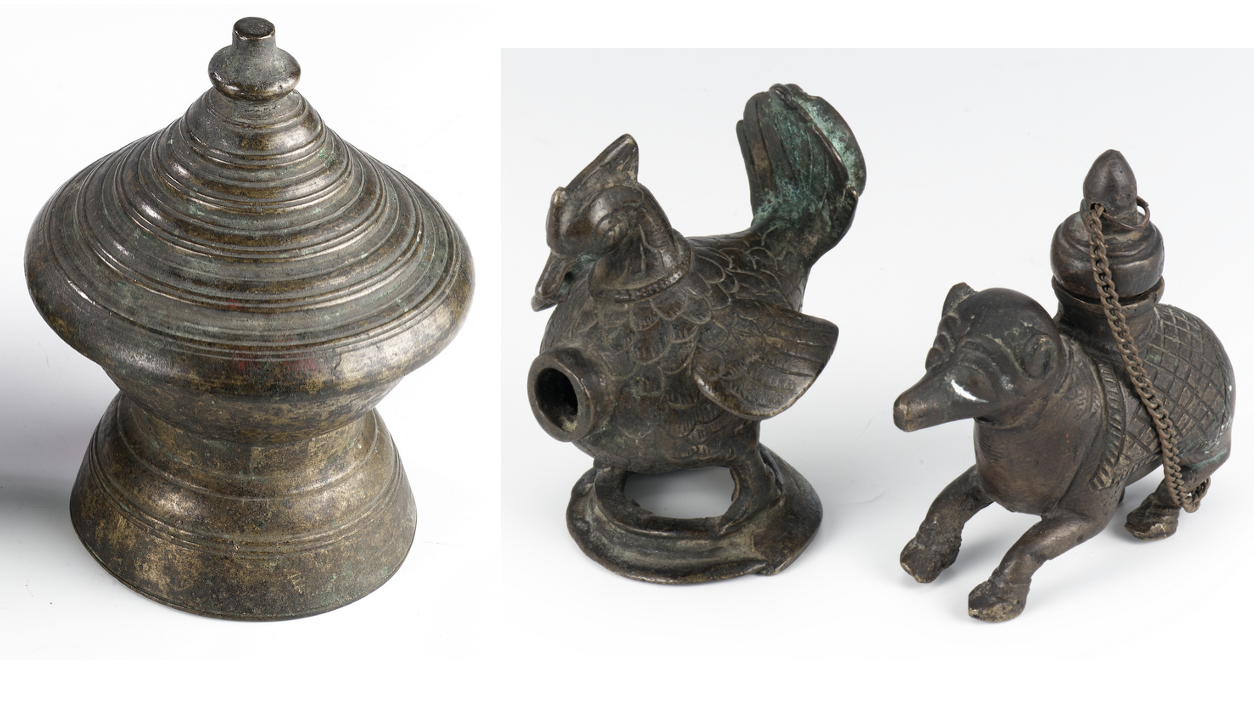
Bali, Sanur, the Byrd
Perfume, like faith and poetry, does not know borders. From India, the fragrance of flowers and spices traveled on the monsoon winds, carried by merchant ships and caravans. In its wake, it sowed the seeds of civilizations across Southeast Asia, where kingdoms embraced India’s gods, rites, and perfumes as if they had always belonged to them.
Legend tells us that distillation itself was revealed to an Indian princess, Nūr Jahān, whose name means “Light of the World.” On the morning of her wedding to Emperor Akbar, she saw delicate vapors rise from the surface of a rosewater fountain. Fascinated, she captured them and understood the secret of distillation. From this revelation, the art of attar reached new refinement, and perfumes became jewels of Mughal courts. Akbar, the great emperor, adored perfumes with such passion that his audience halls forever breathed of amber, agarwood, rose, and jasmine. Scented fountains whispered in his gardens, incense burned in golden braziers, and perfumed smoke enveloped his guests like a celestial embrace. In this atmosphere, perfumery became not only pleasure but also royal science, a craft elevated to the level of painting, music, and poetry.
From the first centuries of our era, Indian merchants sailed the South Seas in search of cinnamon, clove, pepper, and resins. They brought with them not only perfumes and spices but also gods, myths, and art. They founded trading posts along the Gulf of Siam, in the Mekong Delta, in Sumatra and Java. The native peoples, enchanted by this refined civilization, absorbed it without resistance. Temples rose where Shiva and Vishnu joined local spirits, and Indian perfumed rites blended with Southeast Asia’s forests and rivers.
Collection Creezy Courtoy
In Oc-Eo, in present-day Vietnam, archaeologists uncovered jewels, statues, and perfumes from Rome, India, and China, proving this city of Fou-Nan was a crossroads of the world. From there, Indian influence reached Tchen-La, cradle of the Khmers, who would later raise Angkor as the crown of their civilization.
At Angkor, perfume took on a monumental scale. The temples were perfumed with garlands, incense, and scented waters offered to the gods. Dancers, adorned with jasmine, betel, and wax candles, swayed like incarnations of Shiva. Their hair, crowned with golden caps, exhaled oils of flowers and herbs. Their long gilded nails extended their gestures like blossoms unfolding in the night. Before each performance, they bathed in sacred scented waters, blessed by priests, so that their movements would become offerings themselves. Perfume was also protection. In Cambodia, warriors received talismanic tunics inscribed with magic formulas, anointed with perfumes during solemn rites. Sprinkled with rosewater and incense, the fabric became a second skin of invulnerability. In battle, the scent of sanctity mingled with the roar of steel.
Everywhere, incense burned in temples, mingling with prayers. Scented water was poured over statues of Buddha, golden petals covered his effigy, while monks sprinkled the faithful as a sign of purification and blessing. The Mekong became not only a river of life but a perfumed royal road. Even Marco Polo, arriving in the 13th century, was dazzled by the splendor of Khmer civilization. He described cities enveloped in incense, courts perfumed with oils, and women covered in flowers whose beauty seemed beyond human. In their dances, through smoke and fragrance, they appeared as celestial beings descended to earth.
Thus, from India to Java, from the Mekong to Angkor, perfume remained the invisible ambassador of civilization. It was the essence that carried gods, myths, and beauty across oceans, weaving Asia into a single perfumed tapestry.
Collection Creezy Courtoy
Excerpt of « World Perfume Heritage » by Creezy Courtoy. The book will be released on Amazon in November.
From Egypt to India, Lotus Mystical Scents
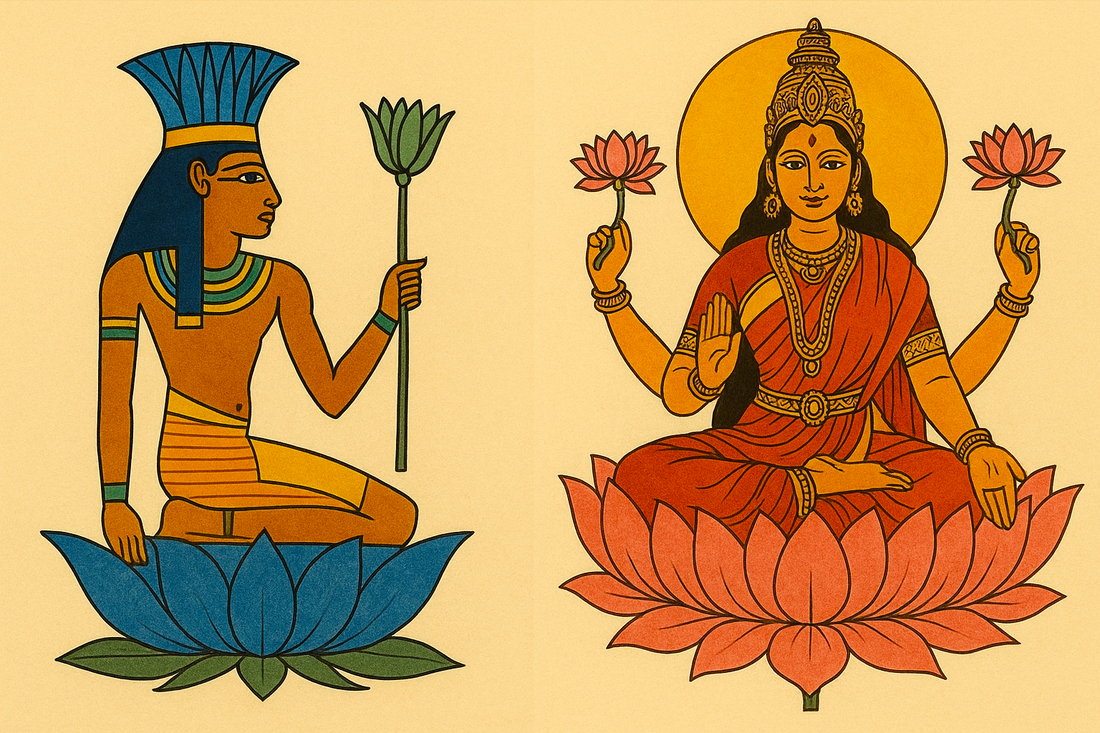
The Lotus holds deep common symbolic and spiritual significance of Rebirth, Purity, and the Divine in both Ancient Egyptian and Indian cultures. In Ancient Egypt, the blue lotus (likely Nymphaea caerulea) symbolized the sun, rebirth, and the cycle of life. It was associated with the sun god Ra, as it opens in the morning and closes at night, as a plant emerging from the primordial waters (Nun), bringing forth the first light. In India, the pink lotus (Nelumbo nucifera) symbolizes purity, spiritual awakening, and detachment from the material world. It’s linked to gods like Lakshmi, Vishnu, and Brahma, who are often depicted seated on a lotus, as rising unsullied from muddy waters, symbolizing enlightenment and transcendence. While Egypt and India developed their lotus symbolism independently, there were ancient trade and cultural exchanges via the Persian Empire, Mesopotamia, and the Perfume Roads. Symbolic ideas (like sacred plants) may have influenced each other over centuries. Buddhism, which emerged in India, spread to Egypt during the Greco-Roman era (especially in Alexandria), and Egyptian mystery religions also influenced early mystic traditions. Botanically, they’re from different genera, but their growth pattern (rising from muddy water) gave rise to similar meanings.
National Flower of India The lotus is India’s official national flower, chosen for its strong cultural and spiritual presence across the country. It represents resilience, strength, and peace. In Art and Architecture, you’ll see lotus motifs in Indian temples, fabrics, sculptures, and paintings. A famous example is the Lotus Temple in Delhi — a Bahá’í House of Worship shaped like a blooming white lotus, symbolizing unity and harmony among all people and religions. In Language and Literature, you’ll find in Sanskrit and many Indian languages, poetic references to lotus eyes, lotus feet, or lotus hearts are common – all expressing beauty, grace, or spiritual connection.
Symbol of Purity and Enlightenment The lotus grows in muddy waters, yet it rises above the surface to bloom pristinely. This makes it a symbol of purity, spiritual awakening, and detachment — remaining untouched by impurity while blossoming beautifully. Sacred in Religions, for Hindus, the lotus is associated with several deities, especially: Lakshmi, goddess of wealth and beauty, who is often depicted sitting or standing on a lotus. Brahma, the creator god, is said to have emerged from a lotus growing from Vishnu’s navel. It represents divine birth and cosmic energy. For Buddhists, the lotus signifies the path to enlightenment – the idea of rising from suffering (mud) and blooming into awareness and wisdom. For Jainists, it also appears in symbols and iconography, particularly in depictions of Tirthankaras.
In essence, the lotus is more than a flower in India – it’s a symbol of rising above, of beauty born from struggle, and of inner divinity.
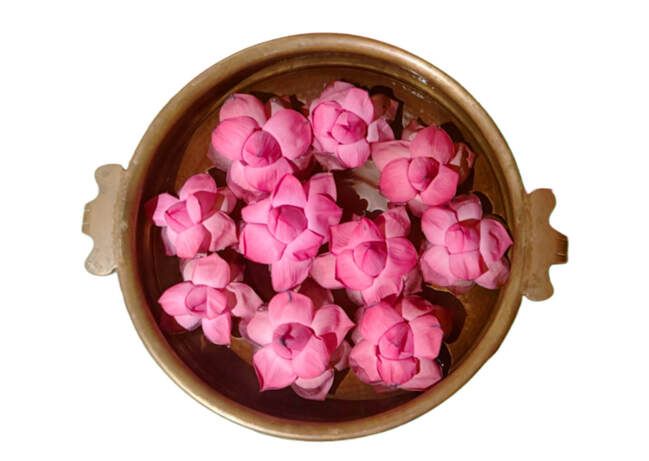
India Lotus Flower
The Scent of the Lotus: A Fragrant Mystery Delicate & Ethereal The lotus has a light, airy, and slightly sweet fragrance – often described as fresh, watery, and soft. It’s not overpowering like jasmine or rose, but subtle, like the whisper of something ancient. Spiritual Undertones In many traditions, the lotus scent is believed to elevate consciousness – making it common in meditation oils and temple incense. It carries an energy of calm, purity, and transcendence. Aromatherapeutic Qualities Blue or Pink Lotus essential oils are prized in aromatherapy promoting relaxation and serenity. Used in chakra healing, especially the crown chakra, it helps in releasing emotional blockages and connecting to inner wisdom. Different Types, Slightly Different Scents Pink Lotus (Nelumbo nucifera): Mildly sweet, fresh, and floral. Blue Lotus (Nymphaea caerulea): Slightly more narcotic, rich, and musky-sweet; sometimes even said to have aphrodisiac properties.
Rare and Precious in Perfumery, the true essence of lotus is rare and expensive, often found in high-end perfumes and sacred oils.
Scent Profile: Indian Lotus Flower (Nelumbo nucifera) The scent of lotus is serene, otherworldly, and emotionally cleansing. It’s not about seduction – it’s about awakening. Like a breath of stillness in a temple at dawn. Fragrance Family: Floral – Aquatic – Soft Green Top Notes: Fresh Rainwater – clean, airy, translucent Crisp Green Petals – soft vegetal notes, almost dewy Hint of Anise or Melon – subtle sweetness, ethereal lift Heart Notes: Delicate Petal Accord – mildly sweet floral, light and cool Soft Powder – clean, slightly creamy, like morning skin White Tea or Bamboo – meditative, Zen-like calm Base Notes: Soft Musk – grounding and skin-like Amber Water – barely-there warmth, like sunlit water Sacred Earth – faint touch of sacred soil or sandalwood undertone (especially when infused into oils)
Egypt Lotus Flower
Scent Profile Egypt Lotus Flower (Nymphaea caerulea) The fragrance is ethereal, sensual, and slightly hypnotic, often described as calming and meditative. It’s not overpowering but rather unfolds gently, like a mist over water. It’s been historically used in rituals and perfumes for its soothing and euphoric properties. Top Notes: Lightly citrusy Fresh and green – a bit aquatic, reminiscent of a clean pond or rain-drenched leaves. Heart Notes: Floral and exotic – the core of the scent is sweet and subtly narcotic. Tropical and slightly fruity – evokes a sense of heady sweetness akin to jasmine, tuberose, or even ripe apricot. Anise-like undertone – very faint, adding to the dreamy, mysterious quality. Base Notes: Powdery and resinous Earthy and soft balsamic – with a very light musky nuance, not animalic but grounding.
The Indian Perfume Heritage
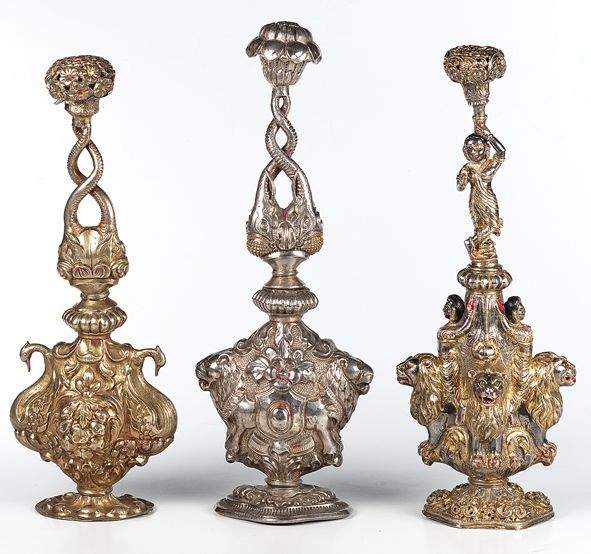
Scented water sprinkler in silverplate used for religious ceremonies with original traces of gilding and coloring. Creezy Courtoy Collection
India, renowned as the « Country of a Thousand Perfumes, » is a vast land with a rich history deeply entwined with the art of perfumery. This title is well-earned due to the country’s extensive cultural rites and religious traditions, which have fostered a profound appreciation for fragrances. Indian literature and daily life are richly imbued with poetic, perfumed legends, and the rituals involve offerings of flowers and scents to the gods as tributes during religious festivals.
In ceremonies, statues of deities are cleansed with scented waters, and spaces are perfumed with rosewater, vetiver, saffron, and blanketed with blossoms. Life’s pivotal events in India, from weddings to funerals, are enveloped in aromatic smoke, symbolizing a continuity of tradition.
The bustling markets of India are a sensory feast, full of vibrant colors and the intoxicating aromas of countless spices and perfumes. Incense burns in abundance, and gifts of flowers and fragrances are tokens of hospitality and friendship. Perfume, known as « attar » in Hindi, plays an essential role in everyday life, symbolizing health, purity, beauty, and spiritual virtues.
In the mythology, Kama, god of love, owns an arch with five arrows all ending with a different flower. Each of them pierces the heart of the victim through its five senses. The most precious of these flowers is (without question) jasmine that symbolizes hope, happiness and love.
Indian women traditionally use kohl to enhance their eyes and indulge in scented baths, anointing themselves with oils like rosewood and tuberose, setting their hair with jasmine, and adorning their faces with floral nectars. Perfumery is esteemed alongside science, medicine, and arts; according to ancient texts, it fulfills the earthly goals of religious devotion, material prosperity, and sensory delight.
Temples, or « gandha-kuti, » are perfumed rooms dedicated to worship. Vedic scriptures, dating back 3,500 years, describe the fumigation of aromatic woods, linking perfumery with spiritual practices. Each God in Hindu mythology is associated with specific flowers, which devotees offer during worship.
India abounds with raw materials essential for perfumery, including mace, nutmeg, cinnamon, clove, ginger, lemongrass, pepper, basil, patchouli, vetiver, jasmine, tuberose, roses…. Among these, sandalwood, considered the sacred national tree, has been cultivated for over 4,000 years. Its aromatic wood is essential for religious ceremonies and holds significant cultural value.
The art of distillation, possibly refined under the influence of Persian advancements, is attributed to Indian origins. According to legend, the Indian princess Nūr Jahān discovered the process leading to modern distillation techniques. Akbar, the « Perfume Emperor, » who ruled from 1556 to 1605, was passionate about scents, leading to a flourishing trade in floral essences at his court.
Fragrance in India is not just a sensory delight but a tapestry woven into the very fabric of its culture, playing a crucial role in its spiritual, social, and economic life, extending its influence throughout Southeast Asia.
Spain was one of the main supply channels for perfumery products in the 15th, 16th and 17th Centuries. In the precedent episode, we saw how the Arabs brought with them advanced knowledge of alchemy and distillation, which was crucial for the development of perfumes. The way they introduced new ingredients and techniques, influencing the European approach to perfumery. They brought with them the art of perfume and the science of perfumery, the culture of flowers and raw material for perfumery. This period saw advancements in the methods of extracting and blending fragrances.
While Spain’s climate and geography were ideal for cultivating aromatic plants and flowers, such as orange blossoms, jasmine, and rosemary, the country also played a pivotal role in global trade. In this episode, we will discover what made Spain even more powerful playing a major role on the Perfume Roads.
Recall that Venice played an important role in the trade of raw material but at the age of maritime exploration, they never thought Portugal would invest seeking new trade routes and expanding its influence. Before the Portuguese opened new sea routes, Venice relied on overland trade routes, such as the Perfume Road and other connections through the Middle East. The Portuguese sea route offered a more efficient and less costly alternative, diminishing the importance of these overland paths.
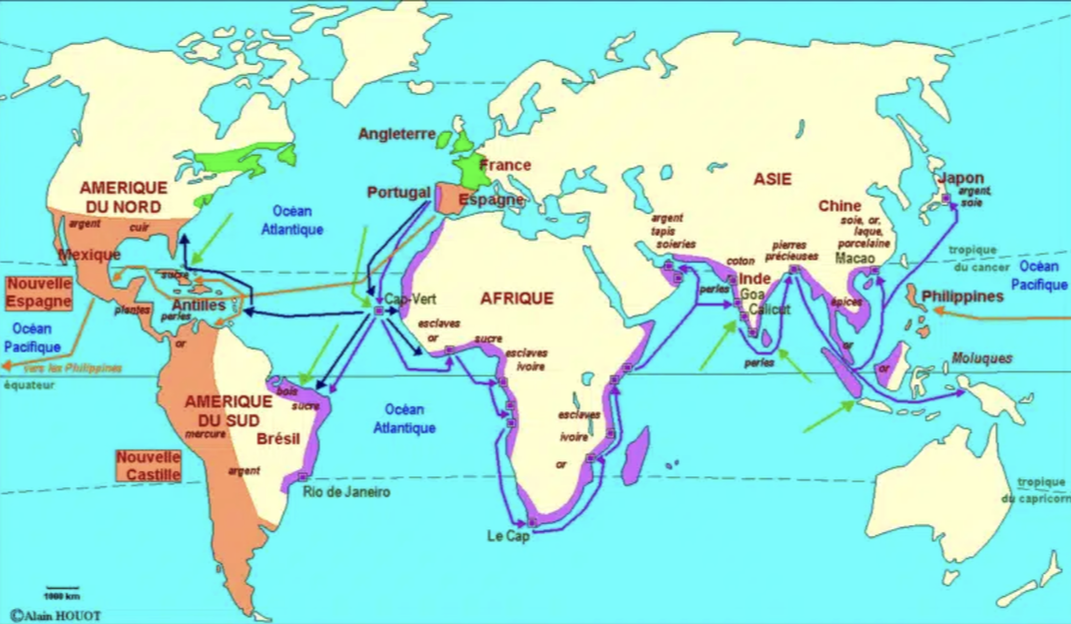
First Spanish and Portuguese Empires XV-XVII Centuries: Orange: Spanish Empire – Violet: Portuguese Empire – Green: French and English Possessions.
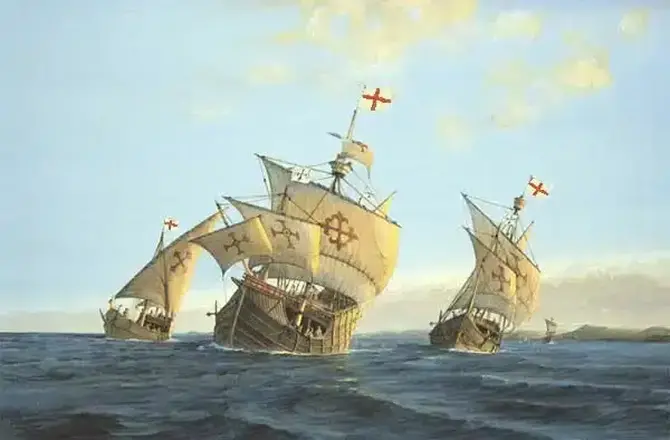
The landmark journey of Vasco da Gama in 1497-1498 around the Cape of Good Hope to India was pivotal. This sea route allowed the Portuguese to access the rich spice markets of Asia directly, bypassing overland trade routes dominated by Venetian and Middle Eastern merchants. The direct sea route to Asia meant that spices and other goods could be brought to Europe more cheaply and in larger quantities. The Portuguese could therefore offer better prices, eroding Venice’s monopoly and competitive edge. Portugal established a series of fortified trading posts along the coasts of Africa and Asia. Places like Goa, Malacca, and Hormuz became key centers for controlling the spice trade. They also developed superior navigational techniques and shipbuilding technologies, such as the use of the caravel, which allowed them to undertake longer sea voyages safely.
Lisbon replaced Venice and became the continent’s larger market for spices and perfumes thanks to its tremendous naval power and to the Portuguese who were excellent navigators. But the Portuguese colonial empire was short-lived. The incompetence of Portuguese monarchs led Spain to militarily occupy Portugal in 1580 and Spain took control of Portugal overseas colonies and their trade. During this period (the Iberian Union from 1580 till 1640), Philip II of Spain became the King of Portugal, allowing the Spanish Crown to control and benefit from raw material in provenance of a vast colonial empire, which included territories in Africa, Asia and the Americas including the spice and perfume trade roads.
The 15th, 16th, 17th and the first part of the 18th Centuries were marked by intense traffic on the Eastern Seas where Portuguese, Spanish, Dutch, English and French were competing for raw materials. Spain used dynastic marriages and diplomacy to strenghthen its trade networks and stabilize its trade interests across Europe, insuring a steady flow of goods. Spanish explorers brought back exotic spices and botanicals from the New World and the East Indies, which enriched the European perfume palette. This exchange led to the introduction of new scents and materials that were incorporated into European perfumes.
When we talk about perfume, everyone thinks about Paris as the center of perfumery, and we forget about the whole world of perfume history. I would like to remind everyone the way perfumery entered Europe and the role of Spain in the perfume heritage. It is not an accident that Spain is taking the lead today in the evolution of perfumery. Spain has an important perfume heritage. For the first episode of this new series, I invite you to follow me into the Spanish Middle Ages.
The initial invasion of the Iberian Peninsula was led by the Umayyad general Tariq ibn Ziyad. In 711 CE, Muslims swiftly conquered most of the region, establishing control over a large part of what would become Al-Andalus. By the time Haroun al-Rashid began his rule, the Umayyad dynasty had already been overthrown by the Abbasids in a revolution known as the Abbasid Revolution in 750 CE. After this, those Umayyads who escape established their own rule in Spain, with Córdoba as the capital, thus continuing the Islamic presence in the region.
Haroun al-Rashid was the fifth caliph of the Abbasid dynasty, ruling from 786 to 809 CE. He is often remembered as one of the most famous and well-regarded caliphs in Islamic history. His reign marked a period of cultural, economic, and scientific flourishing within the Islamic Golden Age. Under his rule, Bagdad became a center of trade and commerce. The capital city was known for its architectural wonders and was a hub for scholars and traders from different cultures and backgrounds.
During and after Haroun al-Rashid’s reign, Córdoba emerged as a significant center of Islamic culture and learning. The city became renowned for its advancements in various fields, including medicine, philosophy, and poetry. It was marked by architectural achievements, such as the Great Mosque of Córdoba.
Al-Rashid was a patron of the arts and sciences. He encouraged literature, philosophy, and scientific endeavors, which helped to foster a rich cultural environment. The famed collection of stories known as « One Thousand and One Nights » (or « Arabian Nights ») was completed during his time, though it is a compilation of tales from various sources.
The Abbasid Empire, under Haroun al-Rashid, thrived economically, which fostered trade relations across the Mediterranean. This period saw extensive trade in luxury items, including perfumes and essential oils. Arab merchants were known for their high-quality fragrances, which would find their way into Spain through the Perfume Roads.
Spain became a center for cultural and scientific exchange. The Arabs brought with them advanced knowledge of alchemy and distillation, which was crucial for the development of perfumes. They introduced new ingredients and techniques, influencing the European approach to perfumery. They brought with them the art of perfume and the science of perfumery, the culture of flowers and raw material for perfumery. This period saw advancements in the methods of extracting and blending fragrances. The city of Córdoba, during the height of Al-Andalus, was a major center for learning and culture, including the art of perfumery. The influx of goods, including perfumes from the Middle East, brought new scents and the art of fragrance creation to Spain.
While Haroun al-Rashid may not have traveled to Spain himself, his reign contributed to the cultural and economic exchanges that facilitated the introduction and evolution of perfumery in the region, influencing both local practices and later European traditions. Perfumes became a status symbol within Spanish and later European courts, much as they had been in the Islamic world. The use of elaborate fragrances reflected wealth and sophistication, and this cultural aspect can trace some of its roots back to the interactions during Haroun al-Rashid’s reign.
The Islamic presence in the Iberian Peninsula lasted from 711 CE until 1492 CE, a period of nearly 800 years significantly influencing the culture, architecture, language and science of the region. Check our next Episode: Spain a Forgotten Legacy Part 2
I would like to enlighten some of the historical figures who contributed to the world of perfume. Fragrance was not just a luxury but an essential aspect of social and political life, shaping cultures and influencing relationships throughout history. From ancient queens who used scents to assert their power and allure to emperors and kings who embraced fragrance as a symbol of sophistication and prestige, they all contribute to develop art of perfumery. They left an indelible mark on the world of scent, turning it into a powerful tool for expression, allure, and social status.
Alexander the Great In 333 B.C., Alexander the Great defeated the Persians at Issos and Egypt moved to the Greek world. His conquests did lead to the blending of cultures, including those related to perfumes.
Queen Cleopatra It was told that Cleopatra, the last Queen of Egypt (69-30 B.C.), Egypt experienced the height of perfumes. Of Greek origin and the daughter of Ptolemy, Cleopatra brought to Egypt one of the finest lifestyles. Before boarding her ship, she had the sails perfumed with scented oils composed of rare and precious ingredients. Cleopatra’s life was all about seduction and scents; Caesar fell under her spell and Antony into her arms.
Emperor Nero Under the Reign of Emperor Nero, Dioscorides, a physician, pharmacologist and botanist, advocated several remedies to prevent and cure diseases. Like Egyptians and Greeks, however, Romans considered perfumes as a sign of the presence of gods. They attributed a scent to each deity.
Queen of Sheba and King Solomon On The Perfume Roads, in the 10th century B.C., Balkis, the Queen of Sheba organized a meeting with Solomon, the Hebrew King. The Kingdom of Sheba (“Sheba” means “Mystery”) was located south of the Fertile Crescent. Its economy relied mainly on the cultivation of myrrh and incense for its main client: Egypt. King Solomon was the absolute Master over this route.
Queen of Sheba and King Solomon
Caliph Haroun Al Rachid Under the reign of Haroun Al Rachid (786- 809), Bagdad became a wealthy trading place, the most affluent and literate in Western Asia and its trade activities developed further. He lead the Abbasid Caliphs to organize a meeting of scholars in Baghdad coming from all over the empire and encouraged production workshops in all science disciplines, from the Greco-Roman world, promoting perfumery. Later, Avicenne (980-1037), invented a “cooling coil” for perfumery while Aricalna (10th century), taught the art of preparing scented waters. They even develop the “alembic” (al–ambiq meaning “vase”). Without any doubt, this rich culture established the basis for medieval perfumery.
Emperor Akbar Akbar, who ruled the Mughal Empire from 1556 to 1605, was so passionate about perfumes that the audience room was always perfumed with flowers, amber, agarwood and perfumes composed of old recipes or even invented by his Majesty. Incense burned daily in holders made of gold and silver while scented water fountains exhaled perfumes around the palace gardens. This royal support encouraged the production and the trade of floral essences that were trendy at the Emperor’s Court.
King François I To secure the import of raw materials from the East (including some used in perfumery) François I signed an alliance with Sultan Suleiman in 1536, on the model of the trade agreements previously signed by the Ottomans with Venice. This alliance gave the French a privileged position on the trade roads.
Queen Catherine de Medici and King Henri II. A little Florentine Princess, Catherine de Medici, arrived in France in 1553. She brought in her luggage creams, pomades and beauty secrets, fashion for bottles worn in a pocket or placed onto a dressing-table as well as the fashion of perfumed gloves, the ultimate symbol of Italian aristocracy. She took with her private perfumer, René the Florentine who opened his first perfumery in Paris, at the Pont au Change. Henri II, under the influence of Catherine de Medici, created the first perfume bottle factory in France, in Saint-Germain en Laye.
King Louis XIII and Queen Anne d’Autriche Perfumes had favor at the Court of Louis XIII, under the influence of the beautiful Anne d’Autriche. Of Spanish origin, she brought along with her the tradition of scented gloves, all the science of the culture of flowers and distillation, which Spain had inherited from the Arabs during the Caliphate of Cordoba. To scent the castle rooms, she introduced to France small cages containing little birds made of scented pastes called “Oiselets de Chypre” (Little Birds of Cyprus). Louis XIII recommended them to purify the atmosphere and as protection from epidemics. Louis XIII, introduced the title of “Master Glovemaker-Perfumer” in 1614 for a true corporation and statutes approved by the Provence Parliament in 1729, this new corporation gradually detached from tannery and finally stopped in 1759.
King Louis XIV, the “Roy Soleil” (or “Sun King”) Appointed “the most perfumed King of the world”, Louis XIV dedication for personal grooming and fragrance is legendary. The Roy Soleil considered adornment as a strategy to promote the prestige of Versailles. Louis XIV even tried to create perfumes with his perfumer Martial. His influence not only revolutionized the world of fragrance but also established it as a key element of royal identity and status.
King Louis XV and Marquise de Pompadour It was not for nothing that the Court of the King Louis XV was baptized the “Scented Court”. Men and women were competing for perfumes, aristocrats, bourgeois, people of law, of finances, men of letters and of the sword: everyone was perfumed. The King ordered that his apartments were impregnated each day with a new perfume. In Vincennes and Sevres, bronze perfume fountains were erected, decorated with statues and bouquets of flowers, to scent the city. Medical practitioners strongly recommended perfume for disinfecting and cleaning. The Toilet of a King consisted in rubbing hands and face with sweet almond oil before sprinkling perfume generously. The Marquise de Pompadour was at the same time lover and advisor of the King Louis XV. Pompadour’s influence on fashion and fragrance, alongside with her extravagant spending on perfumes showcases how intertwined scent and status were during her time. She was the incarnation of the sensual and refined culture of Versailles. Pompadour and du Barry (another Louis XV’s lover) launched the modes at Court. Perfumes were in vogue in all women’s circles in the city and are quickly adopted by any gallant knight, who, as for the powder, adopted the colors and the fragrances of his beloved one.
Napoleon Bonaparte, Emperor of France and King of Italy and Josephine de Beauharnais Napoleon’s meticulous grooming habits and preference for Cologne Water reflect his understanding of the power of scent. He always had a specific bottle of Cologne water placed in his boots. As for Josephine de Beauharnais, Creole, accustomed to the strong scents of Martinique, she received the nickname “la Folle au Musc” (Mad Woman with Musk) while spreading the heady emanations in Napoleon’s entourage.
Emperor Napoleon III and Empress Eugenie Under the Second Empire, a brilliant court led by Empress Eugenie was far too much for parties and balls not to love the refinements of the adornment and perfumes. Napoleon III defended the arts, music and made perfume the prerogative of his court.
In conclusion, the world of perfume is deeply intertwined with history, shaped by influential figures who recognized the power of scent in personal expression and societal status. From regal queens to visionary leaders, these individuals set trends that defined their eras. Their passion for scent transformed the landscape of perfumery and their legacies remind us that perfume is more than just a luxury; it is a reflection of culture, identity, and ambition.
Stay tuned to discover which contemporary leaders might shape the future of perfumery in the coming years and become a part of its history for generations to come.
If you want to learn more about the history of perfume, enroll for Creezy Courtoy’s intensive World Perfume History Course.
Planning your perfume road
Another year has passed, and another has begun.Last year is now history and time to reflect on what we have learned from the previous year that can be passed on by proper planning to those (including ourselves) who will benefit from that additional knowledge and experience gained in traveling on our own personal Perfume Roads.
Here are a few tips on planning this year’s Perfume Road journey:
Step 1: Thoroughly review last year’s goals, achievements, and setbacks and develop an overall evaluation of how the market may have changed during the year that might impact the coming year. What modifications to this year’s planning should you make due to achievements or setbacks you might have experienced last year? Set aside enough time to give your undivided attention to the project. The best way to ensure you’re dedicating the right amount of time is to schedule a time slot for every day over the course of the week.
Step 2: Review your Purpose/Vision, Mission Statement and Value Propositions which are your blueprints to stay on course traveling your Perfume Road. Did you stay on course to fulfil your Mission and Purpose for the year? Is it time to get back on track?
Step 3: Incorporate your past years’ history and experience as well as the history of perfumes into your marketing strategies going forward. Friends and relatives from outside the natural essence community ask me why it is so important to educate consumers about the history and culture of natural perfumes and essences. Besides the fact that perfume history is important human history, understanding our perfume past helps us properly shape the future through effective planning, successful marketing, and giving more meaning to consumers about how important natural perfumes and essences are in their personal lives.
Creezy Courtoy’s beautiful book The Perfume Roadsand her excellent IPF Teacher’s Academy course World Perfume History Course teach us about the importance and value of the culture and heritage of natural perfumery. What those ancient Perfume Roads created historically has a direct and important link to what we did last year and what we will be doing this year and beyond. This is because we are still on those Perfume Roads that will lead us to a better world for futures generations, and your business success will benefit from the efforts you make today in planning your Perfume Road journey going forward. To find out more about world perfume history, visit this link.