Olfaction and Brain Health | How Smell Training Supports Brain Health

Olfaction and Brain Health

Can You Train Your Brain Through Your Nose?
For the last 7 years there has been much more scientific interest in recognising the importance of the sense of smell or “Olfaction” in our lives as well as in applying the Olfaction Training methodology for reversing several conditions like “anosmia”, the loss of the sense of smell. The partial or total loss of sense of smell can be due to injury or infection creating an olfactory dysfunction.
The Olfactory Neural System is complex and is able to replace olfactory dead cells with new olfactory cells from the Olfactory Bulb to the Cerebral Cortex and the Limbic System every few months.
Olfaction Training also has been proven to boost brain health, activating brain regions
that govern emotion and memory, bypassing the Thalamus. This training of the sense of smell assists in the increment of grey matter in the Hippocampus and the Orbitofrontal Cortex, by using short, daily sessions of intentional scent exposure to protect the brain from the risk of cognitive decline in ageing populations.

New generations, influenced from the social effects from the COVID-19 and post viral
controls, have experienced a life intimately linked to computers and screens constantly.  They spend more time secluded in offices or home watching screens browsing social media on their phones, than experiencing real sensory reality, like going to the bush, a park, a garden, re-connecting with Nature, and relating physically with people and animals. This generation requires attention, as some of them already suffer “anosmia” and have not been appropriately treated for this condition.

What could be the effects of not having Olfactive stimulation?

  • Loss of Sense of Smell: Not being able to detect something that can be poisonous or dangerous, so our sense of safety and alarm warning does not get activated.
  • Not able to enjoy pleasant smells and flavours in the food. Feeling depressed.
  • Food tastes different or bland.
  • Not be able to relate well with other people or not be able to feel what other people feel (meaning, lack of empathy), having low or unbalanced moods.
  • Loss of Cognitive Capabilities: Without a proper Olfaction Training, Verbal capabilities deteriorate.  As the Scent Smell training works on Memory, Semantic and Verbal fluency, this can activate some neural connections related to those areas.

There have been Olfaction Training studies on patients with Parkinson’s and Alzheimer’s diseases bringing some measurable improvements in Olfactory, Memory and Cognition areas.
So, there are still people suffering from an Olfactory Dysfunction that do not consider
the effects of losing the sense od smell partially or totally important and take it for granted as an irrelevant sense compared to Vision or Hearing. All senses are important, but the Sense of Smell, Olfaction, since the last century has been completely culturally erased from the senses’ priority list not knowing that indeed Olfaction is an important and primary sense.

When we were born, before we could see and recognise visually, we smelled and tasted.
We related through the sense of smell to our mother even when being in our mother’s womb. We used our taste buds to recognise the taste of our mother’s milk.
Having previous Olfactory experiences can open a door to re-training our brain and re-
connecting with our memory and olfactory sensors in our brain and body, so we can compare what was in our memory of that smell, how we actually smell, and what associated feeling or emotion we had. We need to activate neural connections through a routine of Olfaction Training.
Some other people are fearful about Scents or Aromas in public spaces, cosmetics like
creams and soaps, candles, diffusers and the use of detergents as they have been exposed to allergens experiencing skin irritation, asthma attacks, dermatitis or psoriasis, rhinitis or sinusitis. It is true that there is a population affected by the environment. In these cases, it is recommended to only use the Scents of Nature going to to these places. This will also be true regarding the scent of foods.
Avoiding synthetic and strong concentrated fragrances in the environment will be key for the detoxification process as well as having proper ventilation.

Key Health Benefits and Neuroplasticity
When smelling scents, it is recommended to smell Nature, Food, and Essential Oils as they are in Nature, since we have the advantage of smelling the healing properties of Scent molecules.
Our brains have the ability to continuously change in response to the experience, called “Neuroplasticity”, and this ability may be key to the way in which smell training works.
Neuroplasticity involves the generation of new and/or strengthened connections
between neurons (brain cells), which may in turn lead to changes in thinking skills or
behaviours. We can see evidence of Neuroplasticity when we practice a skill like playing an instrument or learning a new language.
The olfactory network in our brains is particularly neuroplastic. When we frequently use the many parts of the brain involved in the process of smelling through repeated exposure to odours, this process may lead to increased olfactory abilities and cognition. It’s possible then that we could ‘train the brain through the nose.’

Another important factor that is not widely discussed is having a good, healthy diet.
What we ingest, can alter our digestive system and our sense of smell. It has been recently acknowledged in science that there are olfactory sensors in our digestive system. These sensors send signal information to our brain. It is now recognised that certain cases of Anxiety and Depression and other sensitivities have origins coming from problems in our Digestive System. Taste is related to Smell.
The Vagus Nerve is the longest cranial nerve in the body and is intimately linked in the
regulation of our gut, cardiovascular system, respiratory and endocrine systems.

So, what does the Vagus Nerve have to do with our sense of smell and taste?
The Hypothalamus and the Vagus Nerve communicate in a highway exchange fashion
between the gut where the vagus nerve entangles its way through, and the brain that provides feedback. When the distension of the gastric wall changes during the intake of food, the sensitivity of olfactory neurons changes to induce and almost repulse food odors in order to signify that we are satisfied and do not require more. This is fascinating!!

Most recent studies are starting to integrate AI and collection of data from databases to enable personalised treatment for Olfactory Dysfunction.

The International Perfume Foundation provides an in-depth Olfaction Training Certification Course on re-training our Sense of Smell.  This course is not just for people interested in Natural Perfumery and Aromatherapy, but also for those interested in improving their own or other people’s health.

REFERENCES:
1. Dr. Wolf – Anna & Bahar-Fuchs, Alex – “HEALTH & MEDICINE – How smelling can help
your brain” – 14 March 2019 https://pursuit.unimelb.edu.au/articles/how-smelling-can-help-your-brain.
2. Nazareth, Lynn – “CSIRO – You can train your nose – and 4 other surprising facts about your sense of smell” – 23 January, 2025 https://www.csiro.au/en/news/all/articles/2025/january/train-your-nose
3. Liu, Xialei , Yin, Junjei et al – “ The potential of Olfactory Training and dietary interventions in the treatment of Olfactory Dysfunction: A review” – Trends in Food Science and Technology – Volume 167 – January 2026 https://www.sciencedirect.com/science/article/abs/pii/S0924224425005965
4. ATP, Science – “Olfactory – The First Steps of Digestion” July 30, 2020 https://
atpscience.com.au/blogs/blog/olfactory-the-first-steps-of-digestion
5. Matiashova, Lolita; Hoogkamer,Anouk Lisa; Timper,Katharina – “ The Role of Olfactory
System in Obesity and Metabolism in Humans” Metabolites 2024, 25 December 2023

Why the Sense of Smell Matters: The Importance of Olfactory Training

The Forgotten Sense

Why Smell Has Always Guided Humanity

The history of perfume is, above all, the history of our sense of smell.
Long before perfume became associated with luxury or personal beauty, fragrance was one of humanity’s first languages. It was a language without words, capable of communicating directly with the heart, awakening emotions that could not be explained, and creating invisible connections between people, nature, and the sacred.

Every civilization discovered that fragrance possessed an extraordinary power.
It could calm fear before battle.
It could awaken memories of loved ones long gone.
It could prepare the mind for meditation and prayer.
It could accompany births, marriages, and funerals.
It could comfort the sick and bring peace to the dying.
It could purify homes and temples.
It could celebrate life without saying a single word.
Whether in Ancient Egypt, India, China, Greece, Rome, the Arab world, or among Indigenous cultures across the globe, aromatic plants were never considered mere pleasant scents. They were gifts from nature carrying both physical and spiritual virtues. Incense rose with prayers toward the heavens, fragrant oils honored kings and queens, medicinal herbs restored the body, and flowers became symbols of beauty, healing, and renewal.

What these civilizations understood intuitively, modern neuroscience now explains.
Among all our senses, smell occupies a unique place. Unlike sight, hearing, touch, or taste, olfactory signals travel directly to the limbic system—the ancient part of the brain responsible for emotion, memory, motivation, instinct, and survival. There is no complex intellectual filter before an odor reaches our emotional centers. We do not think about a scent before we feel it. We simply experience it.
This remarkable pathway explains why a single fragrance can instantly transport us back to childhood, remind us of someone we loved, or evoke a place we have not visited for decades. A scent can bring comfort before we even understand why. It can create feelings of safety, joy, nostalgia, serenity, or inspiration within a fraction of a second.
Scientists call this the “Proust phenomenon,” after the French writer Marcel Proust, who beautifully described how the aroma of a simple madeleine cake dipped in tea released an entire world of forgotten memories. Yet thousands of years before neuroscience gave it a name, perfumers, healers, priests, and herbalists had already learned to work with this invisible doorway to human consciousness.

Our ancestors understood something we are only beginning to rediscover: fragrance does not simply decorate life—it influences it.
Natural aromatic plants evolved over millions of years, producing complex molecules that allow them to communicate with insects, protect themselves, attract pollinators, or adapt to their environment. When humans encounter these same aromatic molecules, our own biology responds. We breathe them, remember through them, and often find emotional balance because of them.
Perhaps this is why perfume has survived every civilization. Empires have risen and disappeared, languages have changed, religions have evolved, yet humanity has never abandoned fragrance.

Perfume is more than a cosmetic product.
It is an invisible art.
It is a messenger of memory.
It is a bridge between nature and emotion.
It is one of the oldest forms of human wellbeing.
Today, in a world increasingly dominated by synthetic environments and digital experiences, our sense of smell deserves renewed attention. We educate our eyes through museums, our ears through music, and our minds through books, yet we rarely cultivate the sense that may be the most intimate of all.

Learning to smell is learning to become present.
It is rediscovering the richness of flowers, forests, spices, resins, and woods. It is reconnecting with the living world through one of the oldest senses evolution has given us. Perhaps this is why perfume continues to fascinate us after more than five thousand years. Because every fragrance reminds us, however briefly, that we belong to nature—and that some of our deepest memories, emotions, and moments of beauty are carried not by words or images, but by scent.

Continue Your Olfactory Journey
Our sense of smell is one of the most powerful—and often the least educated—of our senses. Like a musician trains the ear or an artist trains the eye, perfumers train the nose. The Natural Olfaction Training Course at the Natural Perfumery Teacher’s Academy is designed to develop your olfactory memory, sharpen your perception, and help you recognize and understand the language of natural aromatic materials.Whether you dream of becoming a natural perfumer or simply wish to deepen your appreciation of fragrance and find a way to Reconnect with Nature, your journey begins with learning to smell consciously.

The Natural Olfaction Training course is available in English, French, Spanish, Italian, Chinese and Arabic languages.

The Language of Scents: How Olfaction Connects Memory, Emotion, Healing, and Nature

The language of Scents

The Language of Scent: Powerful Trigger of Memories and Emotions

The Olfactory Experience of perceiving scents and the use of language for describing
scents have been present in all Ancient Civilisations and in this era. This means that Olfaction has been the most important sense used for survival, communication, protection, healing, and beauty, used in sacred rituals ceremonies and connection to the Divine.

Since pre-history, human beings discovered fire, and then, the fascinating experience of smelling the particles of wood and resins being burned through smoke.
The word “Perfume” comes from this concept in Latin “Per – fumum” that literally means “through smoke”.

In Literature, the language of scent has been used to describe events, places, persons,
gardens, palaces, dresses, the country-side, the misery and the richness, the sacred places, the abundant places, the simple places that trigger our memories, all in  descriptive, poetic, and historical ways.

We have used Language to describe the reality around us and pass the experience to
others, by categorisation of plants and flowers, olfactory properties, health properties, and uses in other aspects of our lives, like traditions. Additionally, we have used Scents as well as Body Language for Healing and Sacred Ceremonies to communicate with our inner-self and align better with Nature.

In pre-history and ancient history, humans had a bigger Limbic System in our brain
than today’s human beings.

The Limbic System is responsible for managing our Memory, Emotions and Identification. In this era of immediacy, screen interaction, isolation, scent restriction or phobia, we are evolving with the risk of developing a smaller Limbic System and this is already bringing a society that does not retain concepts or places or historical factors, and also a society that has less empathy and less need for identifying with others and identifying risks by themselves without the use of technology. Society is been driven by Visual Communication mostly, while one sense is being on demand, this eclipses the other senses.

Aromatherapy has been part of a millenary wisdom and it is very much linked to the
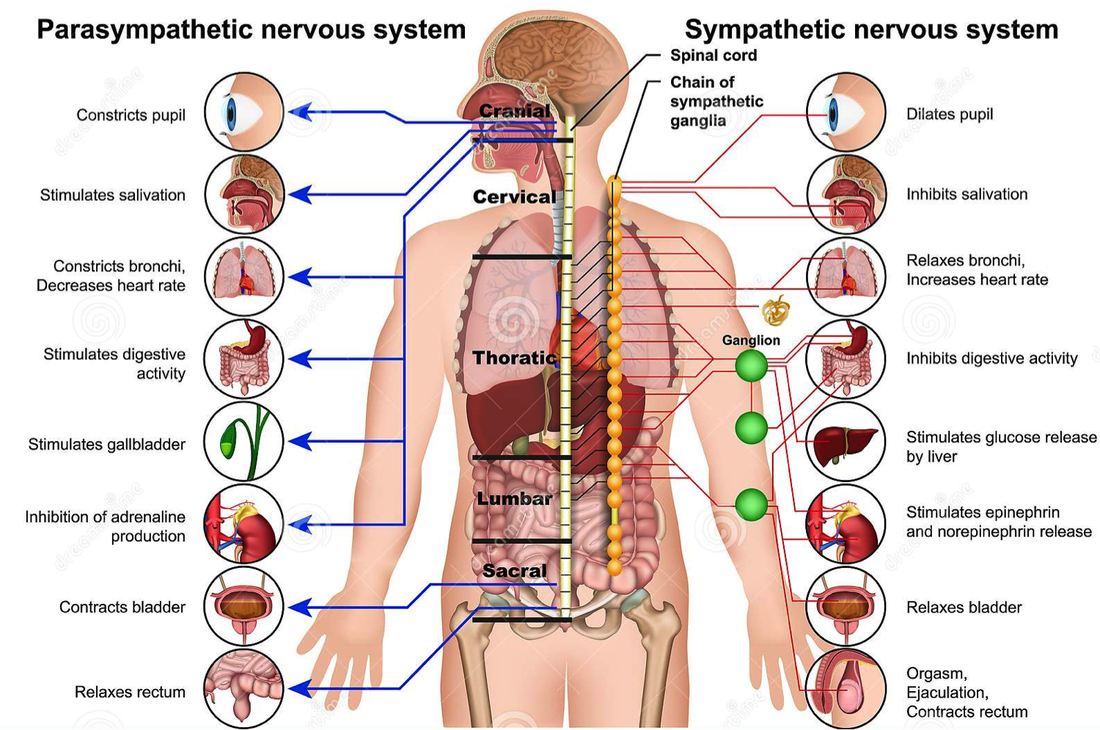
Connection with Nature, using this wisdom to identify healing plants and flowers and different methods of healing. Natural Aromatherapy is defined by the use of Natural Raw Materials, not synthetic fragrances. The best Natural Aromatherapy starts by going out to a Garden, the Bush or Countryside. Experiencing the smell of the actual plants and flowers makes Olfaction a powerful tool, as the aromatic molecules will go to the Olfactory system in our brain and Limbic system, but also will act on our Sympathetic and Para-Sympathetic Nervous Systems in our body.

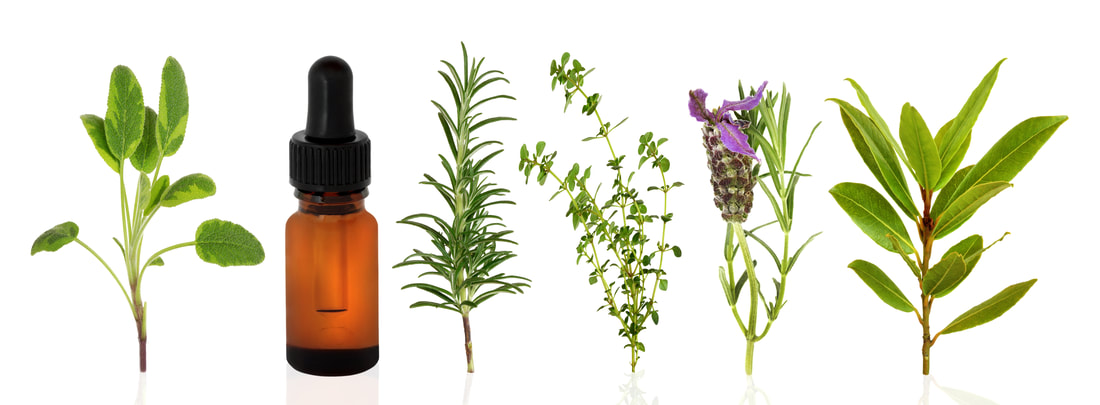
There are various methods of Natural Aromatherapy applications like:
aerial diffusions, baths, oil applications through massage, food, patches, creams or lotions, shampoos, and clay compresses. The scent and properties of each raw material,  plant or essential oil will manifest in their own healing language.
By using the different parts of the plant, sometimes the roots, sometimes the leaves, and sometimes the flowers, the healing therapeutic properties and methods may change.

Understanding the use of essential oils, their potency, contra-indications and application methods is paramount for producing synergies that will act on specific area of our body, organ, or enhancing mood and emotional wellbeing. Plant maceration is also a method for creating oils that are not that potent as essential oils, but provide therapeutic synergies. Essential oils have to be treated carefully, always dilute before application, otherwise, only smell from the bottle. Essential oils are not meant to be drunk; they can irritate our throat and internal organs. Only specialised oil capsules can be used for internal use.  Always consult your medical practitioner.

Another aspect of Natural Aromatherapy is the use of reputable quality of essential oils
that are neither adulterated, nor mixed with other blends or fragrances without indication for the guarantee of high degree of healing properties.
Nowadays, we are blending the experience of Natural Aromatherapy with Natural Perfumes. In the last century, the focus of Perfume was aesthetic, was part of fashion and was no longer made of natural raw materials, but with synthetics and isolates.

Natural Perfumery plays two roles:
1. Expressing beauty, transporting you to a place or emotion; and,
2. Bringing the therapeutic role of each accord of the Perfume construction.
This blend of these two disciplines and Olfaction Training is called Natural Perfumotherapy, a new way to go in Perfumery bringing Scents to Emotions, Wellbeing and aligning us to Re-Connect with Nature.

More info about Perfumotherapy 

The Power of Olfaction

power of olfaction

Our Vision is the door to our Visual Reality. Our Sense of Smell completes that Visual Reality with the perception of Scents and Flavours, generating Memories and Emotions and Connections with other beings, including human beings.
Human beings, as with some other animals including bacteria, have different perceptions of the Sense of Smell. Some animals have more complex sensory systems than others.
As we evolved and became stewards of land and animals, we also developed Art, Culture and Science.  We, as a species, wanted to separate from the other animals and other species, destroying that relationship we had in the beginning between animals and flora that had brought us together through the primary senses and instincts.

We have also developed various lifestyles that have de-programmed our physiological priorities as a species, by alienating our Sense of Smell as almost unimportant, giving much more priority to other senses, such as Vision. Fragrances, being very ephemeral, are very quickly overwhelmed, replaced by sound and visual inputs. The sense of smell, ancestrally the First Sense, has become the last sense we use.

During the last three decades, Humans have been seeking the state of wellbeing, re-educating ourselves to desire sustainability and health, developing the appreciation of natural products, while rejecting the use of synthetics. Still, a lot more needs to be done in this matter. Being aware of how our Olfactory system works can provide some insight and awareness of what to smell and how natural scent molecules can directly impact our health.

smelling during covid

In our present environment, after the Covid-19 pandemic, it seems that we have mostly lost our Olfactory sense and must re-learn to smell. 
Mask protection and lockouts affected our sense of perception of reality, blocking our free instinctive power to breath and lowering the capacity of the Olfactory Sense.  Now that we are beginning to become free of masks, we need to re-train our sense of smell and our breathing techniques.

From birth we connect with our mothers through the sense of smell.
Our mothers when having us as babies, not only shared genes, but also shared phenotype features such as smells. Babies have a very fresh and well-developed sense of smell which guides them to receive messages that make them feel safe. The olfactory sense of babies is so sensitive that allows them to react to odours through motor reactions, respiratory and cardiac rhythmic changes. Babies less than two weeks old orient themselves automatically towards maternal odours. They learn to recognise their mother by her smell, which they will prefer to any other smell and will bond to it. It could be said that “newborns” see with their noses.

People losing their olfactory sense, very often develop symptoms of depression and feel very isolated aside from having a great negative impact in their quality of life and a loss of their sense of safety. That is why it is so important to re-train our sense of smell through Olfaction Training, suitable for future perfumers, trained perfumers and people suffering from affected sense of smell like anosmia, hyposmia or dysosmia conditions.

essential oils

There is also a Health aspect associated with the correct way of using our sense of smell and our relationship with Nature.
It is now paramount to protect our Natural Resources, our flora, woodlands, rivers, lakes, and oceans, as they provide us with scent molecules that can contribute positively to our health and even repair our DNA. We, as Humans, share DNA with other species. We can even repair our hormones and DNA by smelling scents from Nature, like flowers or plants, by using proper Breathing and Olfaction Techniques and using the Natural Raw Materials adequate for Natural Perfumery and Aromatherapy.

Opoponax
Opoponax

The Beneficial Power of Nature
Like many raw materials Opoponax, which means in Greek “heal everything,” is a resin which Dioscorides used to heal Nero in the times of The Roman Empire.
This plant, native of Abyssinia, is also produced in China and sent to India which uses it for Religious purposes. The essential oil of Opoponax is obtained by distillation and it is an excellent fixative used in perfumery. 
Marjoram, since antiquity, has been used by Egyptians and Arabs to relieve migraine, and its scent has soothing and comforting qualities. It is generally used for calming anxiety, nervousness, migraine and insomnia and it is recommended for the people suffering from depression.
Other raw materials, like Juniper, have antiseptic, depurative and diuretic properties.  Geranium has anti-inflammatory properties. Eucalyptus can be used to treat fevers or as a decongestant of the respiratory tract.
Cinnamon, since antiquity, is originally from Sri Lanka and can also be found in the Seychelles and Madagascar. is It is also used not just for culinary purposes, but for medicinal purposes from its stimulating, tonic properties and through improving blood circulation. Cinnamon can also be used as an antiseptic.

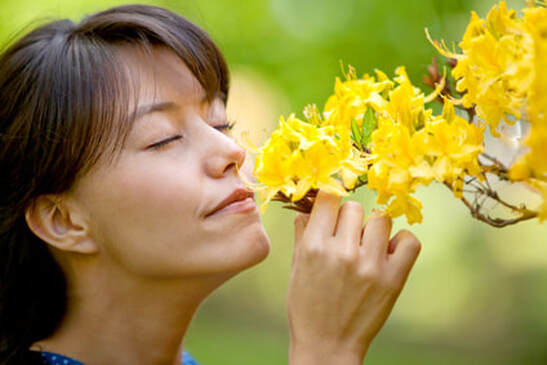
smelling flowers

Many of these and other natural plant raw materials have been used for a thousand years in many forms.
Fumes, ointments, oils, and essential oils with purifying effects have been used for their restorative properties to our healthy electromagnetic vibration frequencies.
Essential oils’ scent molecules travel to the nose receptors that detect the oil molecules with specific frequency, and then send signals of these vibrational frequencies to the brain.
The intention of the healing process is to provide the correct vibrational frequency required that will bring the brain and body back to a state of coherence. This is the therapy by special vibration remedies capable of healing or rebalancing the brain’s and body’s DNA cells.
That it is why is so important to smell raw materials from Nature and not from synthetic molecules, as the Natural scent molecules have all the complete vibrational frequency codes necessary to be used in healing.  Synthetic scent molecules will not have the same healing power, would not be beneficial for treating health matters and, in the worst cases, may distort our hormones and DNA.

New Luxury Code

The New Luxury Code
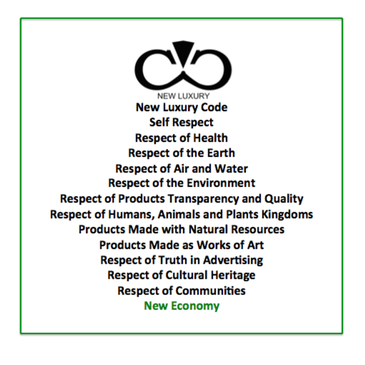
For these reasons, the International Perfume Foundation developed the “New Luxury Code” in Natural Perfumery products that allows us as perfumers to work on this goal by taking into consideration the meaning of “Luxury” as respectful, exceptional, sustainable, perfect, not necessarily expensive, smells and feels great, contributes to culture, sensitive to everyone’s culture, produces a change, makes us happy, and is eternally beautiful.

The Natural Perfumery Teacher’s Academy is proposing monthly online Olfaction Training Courses in French, English, Spanish, Italian, Portuguese, Chinese and Arabic languages. 

Himalayan Secret Scents

Himalayan Secret Scents

Based on one exercise in the Olfaction Training Course, my inspiration for the week is from the Mighty Himalayan Mountains in India.
My travels to these Majestic and Sacred Mountains reconnected me to nature. The aroma of pine trees, teak and cedar woods, Birch, Junipers, and indigenous shrubs was enchanting. The same soil smelled different at differently times of the day. Morning dew brought out a different aroma in the soil compared to the afternoon’s sun-baked soil.

Himalayan Secret Scents

The stillness of the mountains, the silence and solitude surrounding it calmed my mind and this inner peace sensitised and connected me to smells that would have normally eluded my olfactory sense – of clouds, fog, dew, various smells emanating at different altitudes of the Himalayas ranging anywhere between 1000 to 6000 meters, based on the climatic conditions, soil, water, rocks, flora and fauna.

Himalayan Secret Scents

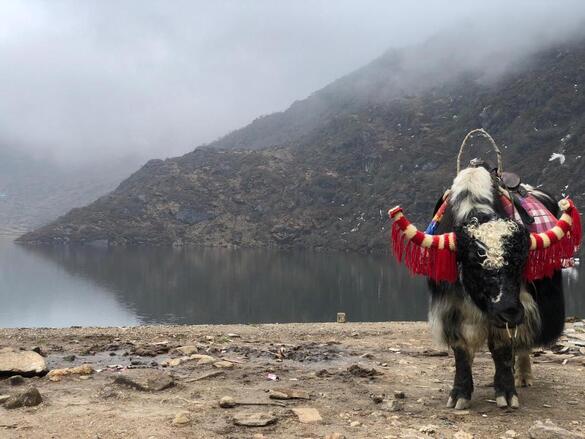
Some areas had the smell of fresh rain, some grassy, some smoky, some woody, some floral, some fruity, some metallic and that of the local animals at various heights – cows, wild yaks, Himalayan tahrs, marmots, wild dogs and musk deers.
The various lakes at different heights also had their own distinctive smells based on the glaciers they were fed from and the hyperlocal flora & fauna surrounding them. 

Himalayan secret scents
Himalaya

The trip was a feast to all my senses, but this time I was more attuned to the Olfactory one and discovered novel and wonderful smells. I was thoroughly rejuvenated and enriched by the whole experience and have a new appreciation for the splendid smells the mountains have to offer, which I will delightfully capture in my Creations.

The Olfactory Sense and the Nervous System

The olfactory sense and the nervous systemPicture

No Sense is More Important than the Olfactory Sense!
I really want you to understand that a perfume is not only a smell, it is much more than that and everyone should really know this before learning to become an olfaction trainer, an aromatherapist or a perfumer.
When you smell a perfume:
-going through your brain, it creates memories and sensations.
-it has an action on your nervous system, regulating organs.
-it is also a gas and what we breathe has immediate access to our blood. While penetrating through the thin membranes of our lungs, fragrances and perfumes reach the bloodstream much more quickly than the absorption of matter by the digestive tracts.
-it influences your hormonal system
-it acts on your organs through your nervous system
-in the bloodstream, it participates to the irrigation of your organs
-it can also modify your DNA and your cell’s organization
Digestion and the breaking down of solids, like medicinal pills, take much more time reaching the bloodstream, as the absorbed solids must be digested and pass through the thick intestinal wall.

These are the reasons making a perfume or blending essential oils has responsibilities. 
When you teach olfaction training, when you train yourselves, when you create natural perfumes or when you blend essential oils, always study the particularity of the oils. Do not use products without knowing their origins.
Olfaction can be dangerous. With essential oils, you can always find data and talk to the person in front of you.
With synthetic substances you have no historical data like we have for flowers and plants. Natural Perfumes are more expensive but it is worth to consider !

Learn to train your olfactory sense

Perfume, by simple olfaction, sends messages to the nervous system, especially, to the area called « the big sympathetic » which plays a very important role in the maintenance of the health balance of humans.  
The nervous system is the supreme organizer of matter, where life emanates. Its actions spread to all the organs where it regulates the different functions to achieve this harmonious whole that is the human body.
Besides, it assures the defense of the organism in protecting the body from external attacks.
”The big sympathetic” is made of a double chain of joint ganglia, situated at each side of the backbone. From these ganglia emerge many nerve connections terminating at the vegetative life organs: liver, spleen, lungs, heart, blood vessels, etc.

In some regions of the body nerves also form real networks, and insure the communication of the big sympathetic with the central nervous system.  
The nervous system presides in exchanges, warns of failings, provides the various organ needs and rescues those that are threatened.   
It directs the natural defenders: the white blood cells or leukocytes, also called phagocytes.   
The stronger the microbial attack the stronger the defense.     
Different conditions, by their suddenness or duration, can cause an abrupt disruption in the balance of the nervous system and also on the entire organism.  A failing nervous system can occur in different ways: tiredness, insomnia, unaccustomed emotional stress, sudden weight loss, or an uncharacteristic tendency to exaggerate or discourage.  If, at this moment, a bacterial attack occurs, the nervous system would not have the necessary strength to fight it.

Within the nervous system is the autonomic nervous system, which then contains the sympathetic and parasympathetic nervous systems.
These two systems are involuntarily, meaning our body does not have control over what it is being performed.

The sympathetic nervous system is known as “fight-or-flight”, while parasympathetic is known as “rest and digest”.
Even though they are different, these systems still work hand in hand with one another to help control the way our body works.
Sympathetic is almost like an alarm clock, as it arouses the body and stimulates the nerves to start working. On the other hand, parasympathetic helps calm the body down, as it brings the body back to its normal state.
Natural essential oils can rebalance your nervous system, therefore it is important to learn aromatherapy and olfaction training before learning natural perfumery.

If you want to learn more about the importance of your olfactory sense, if you want to learn how to train, preserve or restore your olfactory sense, enrol for Creezy Courtoy’s 8 weeks Olfaction Course. 

Aromatic Journal of an Olfaction Trainer

Olfaction training session

Aromatic Journal of an Olfaction Trainer
by Maria Rodriguez Genna

One of the exercises during Creezy Courtoy’s olfactory training course was to be fully conscious of our sense of smell and to note our progression everyday. It was an interesting experience being purposely smelling everything to train my nose. 
  
First day: What I recognized is the smell of skin. Clean skin, dirty skin, also my little daughter received a vaccine so I smelled her arm and I noticed a change in her natural scent, not long afterwards, but it was more noticeable the next day. On the street I smelled the salty air, the fresh green aroma of the trees, the gasoline obnoxious scents from the traffic.

Second day: I tried smelling ice, although it just smells like water, practically inodorous, the cool feeling has an effect on the nose. This cold scent is difficult to describe. It’s fresh, cold, sharp, almost metallic or even gassy like smelling nitrogen or helium. I didn’t go out for many days because my daughter became ill with fever for days due to the vaccine and I had to stay home to take care of her. So I did experiments with what I had around me at home, like laundry, cleaning items, medicines, etc.
                 
Third day: I did a different exercise, I used imagery to recall or remember how a scent smelled. Like the sea and the beach, or for example amber notes, how a cake would smell,etc.
 I also used images like paintings and tried to imagine how colors would relate to scents, for examples amber notes, the color already tells us of possibly resinous, heavy notes or even honeyed, white can be powdery, heady aromas, narcotic. So it was like trying to smell a painting.
                 
Fourth day: I tried imagining what notes would have a perfume I’d like to create, and if they would harmonize. When I imagined the notes, the scents came to mind, like a faint sketch of a drawing, with colors and scents. I would need materia prima for experimenting with these notes and to corroborate if my imagination was correct and they are harmonious or not.
                 
Fifth day: I quickly went to pick a package to the post office but with masks it’s difficult to smell much, only this cottony artificial scent it has, very unpleasant. They smell a lot like hospital sanitizer. It’s an interesting observation, how if we are very distracted with chores or if we go out but are thinking about something while we walk, we tend to lose the scents, because our attention is overpowered by thoughts and our other senses. This is something I’m trying to train myself to, because very easily my other senses overpower my nose, unless of course I close my eyes or try to consciously smell, with intention and full attention.

Last day: Noses can get accustomed to some smells, that is an observation.
I need to focus on something different for a few minutes, then I can revisit certain smells to be able to analyze them. My dry allergic nose doesn’t help either. So much pollen in the air, it can be smelled and it makes the throat and nose powdery and itchy. I will keep training because I’m very used to daily scents, that they disappear into the background. Usually opening a window helps, I notice it moves scents around and that makes my brain perceive them better.
I’m trying to train my nose to human skin odor. Just like I can recognize my little daughter’s natural skin scent, I’m trying to consciously remember or discreetly smell people close to me,to see if I can learn their unique aroma. It would be like taking an aromatic photograph to remember them.  So far, I’m being successful with people that are very close to me. 
The challenge is to smell different people and without them noticing -hahaha- but it’s an interesting anthropologic experiment. There’s someone I know, a really good friend, that smells incredibly good and it’s not perfume but natural scent. So all this research made by Creezy Courtoy about gorillas is starting to make sense, how they can recognize each other by scent, chose healthy future partners, etc.  For someone in this field it is normal musings, but for the rest of the world it is politically incorrect so I have to be cautious if I will be training with human species. Gorillas would appreciate me getting to know them by scent much more!