Scents to Reconnect with ourselves

Scents to reconnect with ourselves

SCENTS OF CHRISTMAS TIME

Christmas time is celebrated throughout many days, even after Christmas Day. In some countries, they extend it up to the first days of February.
Christmas time, in Winter time, is decorated with beautiful Christmas ornaments,
lights, and listening to Christmas Carols, Classical music or any other music that invites us to reflect and relax, sometimes, we also get music to gather with family and friends and enjoy the time sharing love, food, songs, games and gifts. Christmas time, in Summer time, in some places they like to have similar Christmas decoration, music and food than the people from Northern Hemisphere, but in general, due to the warm season, people are more relaxed about decorations, and more attuned to go out and swim, smell the flowers in bloom from Spring, experience the breeze and humidity and enjoy the birds and flying insects pollinating flowers and plants.

What is the Scent of Christmas Celebration made of?
Depending of our culture of origin, this Scent will vary.

In Western Christian Culture is generally a cozy blend of warm spices (cinnamon, clove,
nutmeg), fresh conifer greens (pine, fir, cypress, spruce), sweet baked goods (ginger bread,
almond bread, vanilla, anise), bright citrus (orange, lemon) mixed with peppermint, all in
harmony with mulled wine and cider with cherries, cranberries mixed with the smell of turkey, ham, beef or chicken and potatoes, carrots, onions, garlic, sweet potatoes, beans, chick peas, green peas. Inside the churches, the smell of tuberose and myrrh, frankincense and candles accompanied with Anthems and Christmas Carols.
In Southern Europe, the smell of fish and seafood with peppers, olive oil harmonises
with sweet nuts deserts, dried fruit, red and white wine or mulled wine, cider, brandy to drink. The Christmas decoration also include fresh conifer greens adding a fresh earthy smell. The Christmas style of sweet bread is puffed yeast-based, like in Italy, they have Panettone, in Greece, something similar to Panettone, they have it also for Easter, in Spain, they have “Rosca de Reyes” for the 6th of January. These sweet puffed breads have lots of sugar and dried fruits and usually are taken with frothy warm cocoa drink. The smell in that time is sweet almond, vanilla, fruity, icy sugar, cacao, vanilla like.

In Mexico and some Latin-American countries, the European and Spanish influence is
there in Christmas, but at least in Mexico, we have added some other dishes and aromas into Christmas, like the powder of dried prawns mixed with cooked rosemary and spicy and hot “mole” paste and cooked small potatoes. Some people may cook prawns as a tradition too. Another traditional dish is “Chiles en nogada”, a delicacy of stuffed capsicums or “Chile Poblano” with minced pork meat, blended almonds, covered in an almond sauce and pomegranate seeds. This dish mixes the green spicy chilly with the sweetness of almonds, pork meat and the bitterness of pomegranate seeds. Some more indigenous alcoholic drinks are also part of the tradition like Pulque, Tequila.
Some other Latin-American countries in South America, will cook “ceviche”, based in
fish, seafood, potatoes, lime juice, peppers, salt, tomatoes, coriander, cucumber, avocado, red onion, garlic, and orange juice. This is a very fresh, oceanic smell dish.

In Australia and New Zealand, similar Christmas Celebration custom as the Northern
Hemisphere, with some more simplicity and flexibility adding as a desert “The Pavlova”
a Meringue based fruit creamy desert with strawberries, black berries, kiwi fruit, mango slices. It is soft, easy to digest, sweet combined with the bitterness of the fruit white wine, cider or rose wine are served as drink, seafood is also popular and fish with potato chips and lots of vegetables like potatoes, carrots, spinach, sweet potato, parsley, coriander, mint, orange, lime, lemon, beetroot, red onions, garlic, mushrooms, all blended in black-pepper, marine salt or pink pepper. After dinner, the scents from black tea or herbal tea infusions with milk or coffee or chocolate milk are enjoyed.

In the Middle East, Christmas celebration dishes feature with roasted lamb or chicken,
usually stuffed with spiced rice and nuts (pine nuts and almonds) combined with fruits like dates, also hummus, tabouli, baba ganoush, kebbeh with coriander, peppers as garnish for the dishes. The Baklava is a very sweet festive cake that also is added into the Christmas Celebration. There are regional variations including the Syrian stuffed turkey, Palestinian Qedreh (lamb, rice, chickpeas) and Egyptian Fatta, all seasoned with spices like cinnamon, allspice and baharat.

In Asian Countries, they adopted some of the Western Christmas traditions blent with
their own particular dishes for festivities:
In Japan, they use KFC (Kentucky Fried Chicken) nuggets with a desert dish “Strawberry
shortcake” which it is a fluffy sponge cake with cream and fresh strawberries. Other sweets
more into the Japanese custom are “Wagashi”, are moulded traditional sweets in the shape of snowmen.
In Philippines, they have baked rice cake with coconut milk, salted egg and cheese called
“Bibingka”. The “Puto Bumbong” is a purple rice cake steamed in bamboo, served with butter, coconut and sugar. Also they have a variety of pastries. They also have many Spanish influence savoury dishes for this celebration made of pork, chicken and beef.
In Vietnam, they have noodle soups, savoury crispy rice cakes with meat and for desert,
chocolate log cake with French influence recipe.
In India, they celebrate with hearty meat dishes with spices like “Biryani and Curries”, accompanied with sweets like “Nankhatai,Bolinhas and Karanji”. For roasted meats, they use goose and duck.
In Thailand, they use spicy red curry with coconut milk, herbs and meat. As a desert,
mango sticky rice with coconut milk.
In Korea, there are savoury pancakes with vegetables, meat or seafood, braised short ribs.
As a desert, rice cake soup, traditionally for New Year celebrations but also shared on
Christmas celebrations.
As decorations in Asian countries, Mango Trees are decorated for Christmas and oil-
burning lamps are used in India.
In China, people prefer to have Christmas celebration outside, instead of cooking at
home. Their food varied from hot pots to Western foods. People give apples to friends and
love ones. Apple signifies “fruit of peace” to Chinese. Some of the staples for Christmas dinner are chicken, duck or dumplings. As a desert, they have coated hawthorn fruits with malt sugar on a bamboo skewer.
In African Countries, there is a vibrant feast of spiced rice dishes, roasted meats (chicken,
goat and turkey) with flavour stews and sides of fried plantains salads and small chops like rich fruitcakes, sticky fruit puddings.

As you can see, Christmas time scents are varied wherever you are.
This is an aromatic glimpse of the World Christmas Celebration Season in food and aromas and decorations as part of the way people stop and value community, reflection, and gathering for peace and harmony. These scents throughout the world are made for us to enjoy, to recover that vibrancy and motivation, and to reconnect with Nature and with ourselves!

Bees are Keepers

Bees are keepers

Exploring Traditions
In the 18th and 19th centuries, a fascinating tradition emerged in rural communities across Europe and beyond: the practice of informing bees when a member of the household passed away. This custom, steeped in folklore and superstition, highlights the deep connection between humans and nature, as well as the cultural significance of bees in the lives of our ancestors.

A Conversation with Nature
The act of speaking to bees during times of mourning was believed to ensure that the bees would not abandon their hives. Many people viewed bees as not only valuable pollinators but also as protective spirits of the household. By informing the bees of a death, it was thought that the bees would understand the solemnity of the moment and that the family could maintain good fortune and continued prosperity through their honey production.
This ritual often took place during funerals, where a family member, close friend, or neighbor would softly approach the hives and quietly share the news of the passing. Phrases such as “Hive, your master has died” were commonly uttered. The belief was that if bees were not told, they would sense the loss in their own way, leading to a decline in honey production, swarming, or even the death of the bees.

Apiculture

Cultural Significance and Variations
The tradition of telling bees was particularly prevalent in England and parts of Wales, although variations of the practice existed in other cultures as well. In some regions, it was customary to veil the hives during the mourning period or to place a black cloth over them to signify the death. These practices are rooted in a deep respect for bees as integral members of the ecosystem, deserving of communication and care.
In addition to the act of telling bees, some cultures believed that bees could carry messages to the deceased. The notion that these creatures had a unique connection to the spiritual realm added an extra layer of significance to the tradition. The simple act of conversing with these tiny beings symbolized a reverence for life and death, and an acknowledgment of the interconnectedness of all living things.

Decline of the Tradition
As societies evolved and industrialization took hold, many of these rural customs began to fade. The growing shift towards modern agricultural practices and the increasing distance from nature diminished the significance of this practice. However, the fascination with bees has sparked a resurgence in interest about their ecological importance, prompting many to reflect on the historical roles they played in our lives.
Today, while the tradition of telling bees may no longer be widely practiced, it serves as a poignant reminder of our relationship with the natural world. As we continue to face challenges related to bee populations and environmental sustainability, revisiting these traditions can inspire a renewed appreciation for these vital pollinators.

Bees on hands

Sustaining Mother Earth

Learning Natural Perfumery

Natural essences, and the flowers and plants they come from, are some of Mother Earth’s greatest gifts, benefiting human health and happiness for centuries. Knowing this, aren’t all of us who work with these essences obligated to ensure those benefits continue for our customers, ourselves, our children, and our children’s children? 

If you are interested in a more sustainable business, here are several steps you can take beginning today:
  1.  The first step is a personal commitment to sustainability. When we fly, the flight attendant always instructs us to first put our own mask on before helping others. Sustaining Mother Earth begins within ourselves. 
 
  2.  Next step is to make sustainability part of your Purpose Statement, Mission Statement, and Value Proposition and make sure everyone working with you understands your commitment and what it means to everyone else in the supply chain. 

 3.  Once these commitments are made, begin educating yourself on what sustainability really means for your business, the natural essence supply chain community, and most importantly for establishing and keeping customers for a lifetime.

Consumers prefer buying from companies that don’t just sell great products. They are also looking for authenticity, integrity, and transparency.  
Companies that work with growers and processors that are mindful of the air, water, earth, and the animals and plants that surround them, can help you build trust and confidence with consumers, which is why IPF and other leading experts in essential oils around the world developed Sustainable Essential Oil Standards (SEOS) in 2020. 
Real sustainability (rather than greenwashing or virtue-signaling) is far more comprehensive than just working with a single program that is environmentally friendly. 
SEOS breaks down sustainability into 5 Pillars and then expands each of these Pillars into 5 standards per Pillar, totaling 25 separate sustainable standards.

5 Pillars of Sustainability
Environmental Sustainability
Cultural Sustainability
Social Sustainability
Distribution and Labeling Sustainability
Economic Sustainability

Here is a list of benefits SEOS will bring:

  1. Giving voice to educated and informed Consumers who demand sustainability in the products they purchase.
  2. Healing the huge disconnect between the extreme ends of essential oil distribution from growers/processors on one end to retailers and consumers on the other end through shared values.
  3. Creating important value-added benefits to differentiate high-value essential oil products within the Natural Essence Community.
  4. Keeping flowers in natural essences worldwide which supports bees and other pollinators. 
  5. Making possible full transparency of the essential oil supply chain necessary for consumer confidence and trust.

You can find out more about sustaining Mother Earth in natural essences by visiting the SEOS website here:  https://www.essentialoilstandards.com/
 

Preserving Children Olfactory Sense


Preserving Children Olfactory Sense

The olfactory sense is the first sense to be developed in the foetus.
It starts during week 7.  It is  also the sense that arrives at maturity before the others during week 25. Immersed in amniotic liquid, the foetus swims in a bath of emanations and swallows four to five quarts of flavoured water per day.  Before their first feeding, newborns show attraction for their own amniotic liquid and keeps this preference for the one or two days required to adapt to the new food source..  
Strongly flavoured foods, such as cumin, ginger, anise, when consumed by pregnant women can contribute to an interesting prenatal olfactory experience for the child.  

The olfactory sense presents an important development in infant behaviour.
The first odour discerned by newborns is the smell of their mother, and it is that smell which will determine their behaviour towards others. The mother not only shares genes with her child, but also shares phenotypic features that are smells.   The olfactory sense of newborns is certainly their most developed sense. It guides the child, and the messages they receive make them feel secure. 
Only a few days after their birth, babies begin using their noses to receive all emanations passing around them.  Their smell is so sharp that they encounter all odours, smells that we are not able to smell anymore.  Their olfactory sense is so much more sensitive than that of an adult. Even though they do not yet know how to express themselves verbally to communicate their senses, newborns react to odours through motor reactions of the respiratory or cardiac rhythm changes.  
Babies less than two weeks old orient themselves automatically towards maternal odours.  They will learn to recognize their mother by her smell, which they will prefer to any other smell and will bond with it; this process gives them the security they need to live. 

It could be said that newborns “see” with their noses.  
When they grow older, children will use their sight as their primary sense and the olfactory sense appears last.  This is why it is important to preserve their olfactory sense, encouraging them to smell as often possible. This will prevent them to lose this important sense and feel insecure in the future. 
“Les Ateliers des Petits Nez” (Workshops for Little Noses) pilot project proposes olfactory menus to nurseries and kindergartens.
With the support and the involvement of master chefs, IPF proposed the food needs of the child and to the development of their olfactory perceptions. Menus should comply with local dietary directives and also budgetary and organisational instructions. 

Menus are composed such in a way, not to mix ingredients. 
They can be ground, but only ground separately to not mingle fragrances, allowing children to discover them one by one.
Chefs are different for each country, so in order to respect the children’s food culture, in our course we don’t give you recipes but we will list the ailments adapted to baby and child development.
It has been proven scientifically that the sense of taste is 85% olfactory. This training will not only preserve and awaken children’s olfactory sense, but also their tasting curiosity and a good food habit.
Children will then learn from the youngest age to associate all of their senses together starting from the olfactory sense.

More info about the course

Our Children’s Olfactory Sense

Foetus

OUR CHILDREN OLFACTORY SENSE

The Olfactory Sense is the First Sense to Begin Development in the Fetus
I have always been fascinated by olfaction, which is why I spent time studying gorillas. 
Like gorillas that use 100% of their olfactory sense, newborns have the same powerful sense of olfaction. Olfaction is the most powerful sense of all their senses.  It is the first sense to begin development in the fetus, and arrives at maturity before all the others. 
Immersed in amniotic liquid, the fetus swims in a bath of emanations and swallows four to five quarts of flavored water per day.

Newborns See With Their Nose
The first odor discerned by newborns is the smell of their mother, and it is that smell which will determine their behavior towards others. 
The olfactory sense of newborns is certainly their most developed sense. It guides the child, and the messages they receive make them feel secure. 
Only a few days after their birth, babies begin using their noses to receive all emanations passing around them. 
Their smell is so sharp that they encounter all odors, even those we are no longer able to smell. Their olfactory sense is more sensitive than that of an adult. 
Even though they do not yet know how to express themselves verbally to communicate their senses, newborns react to odors through motor reactions of the respiratory or cardiac rhythm changes. 
Babies less than two weeks old orient themselves automatically towards maternal odors. They are dependent on their mother’s constant attention to feel psychologically well. 
They will learn to recognize their mother by her smell, which they will prefer to any other smell and will bond to it; this process gives them the security they need to live. 
This is why we can say ”newborns see with their nose”.

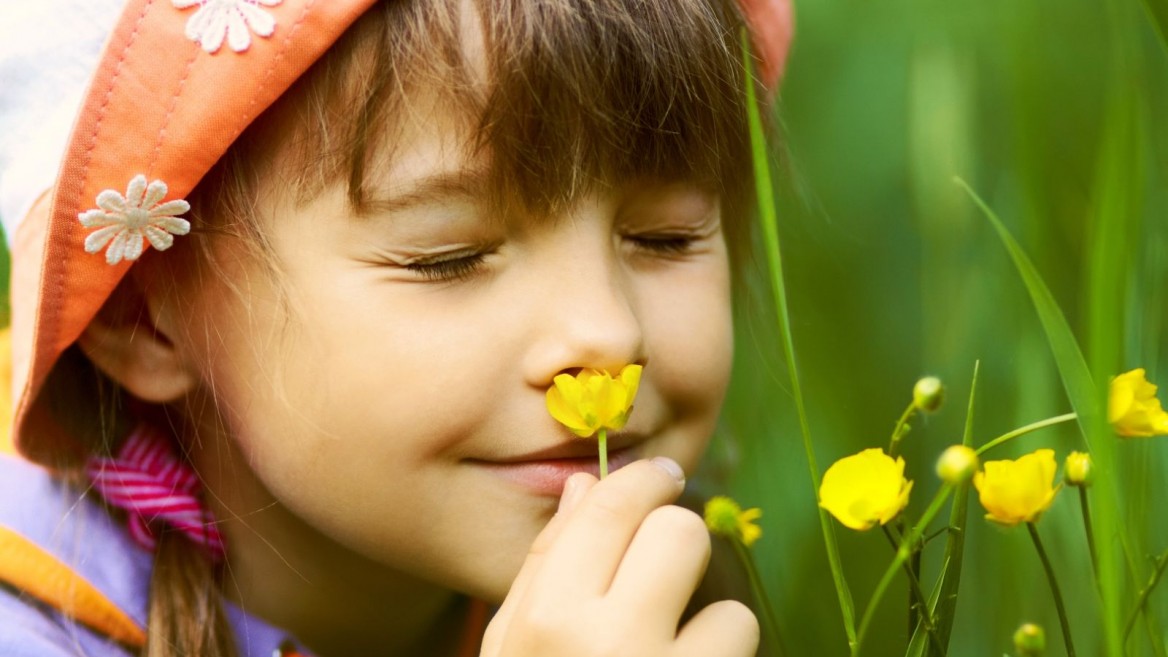
child smelling a flower

The First Years of a Child’s Life Are Very Critical.
The olfactory sense, (and instinctive sense, considered as too animal-like), was almost entirely rejected by our society.
In our present adult environment sight prevails over all other senses. Human beings have lost their olfactory sense and must learn to smell again. Olfaction is a very important sense in the harmonization of human beings because to feel good, we need all of our senses to be in balance. If the olfactory sense is not maintained, it progressively disappears sometimes completely when approaching old age. 
It is only lately that our society is realising how important the sense of smell is.  Still, many parents and educators do not pay much attention to their own sense of smell and are not teaching their children to do so. 
This is why, I have put in place a Children Olfactory Preservation Program starting at 4 months, when babies start eating solid food.
The first years of a child’s life are very critical. Children’s sensory experiences help them build a bundle of emotions and sensations that gives them tools to grow and develop in harmony.  It is necessary to help babies and young children preserve their olfactory habits. 

How Can We Engage Kids To Preserve Their Olfactory Instincts in This Visual And Auditory Civilization?
How can we recreate olfactory education and re-develop olfactory habits? 
Les Ateliers des Petits Nez (Workshops for Little Noses) have been especially created to teach babies and children how to preserve the power of their olfactory sense. The International Perfume Foundation previously tested this Children Olfactory Preservation Program in nurseries and kindergartens.
Today I am giving lectures on this subject, and I have created an Online MasterClass to teach young parents, grandparents, educators, nurseries, kindergartens and schools to accelerate this movement. 

Our children are our future, they need to feel good and to feel secured to face the challenges of this changing world.

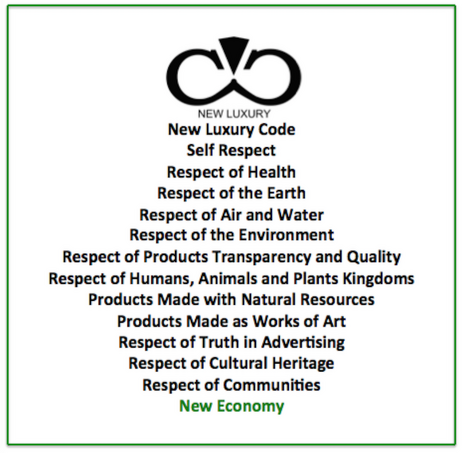
New Luxury Code, The Value of Respect

The New Luxury Code

Make no Mistake; Selling to Consumers Today is as Difficult as it Has Ever Been, and it Doesn’t Appear it Will be Easing up Anytime Soon. 
With competition so strong from large brick-and-mortar retailers as well as rapidly growing online retail activity, continued success for high value retailers will increasingly depend following these three basic value-marketing fundamentals:

  1. Develop a totally value-based business to differentiate you from the competition and persuade growing numbers of high value customers there is greater value in your products than that of other competitive products. 
  2. Target consumers who demand more value, will pay more for receiving value, and if satisfied will repurchase again and again.
  3. Follow the New Luxury Code, the most important value-marketing fundamental. 

The New Luxury Code is about recognizing and acknowledging the value of ourselves and the world surrounding us. 
It is a continuing reminder of what is important to respect and why; and because of its importance, the New Luxury Code should be part of the value proposition of everyone involved in the high value essential oil distribution chain community from seeds to consumers.

How Can High Value Retailers Express Their Respect for Consumers?

  1. Understand what represents value to them and then provide that value. Consumers want natural products, free from GMO and synthetic chemicals. They also want to know more about who produced their products and whether they were produced sustainably.
  2. Always treat customers courteously and professionally, even if you disagree with them. Angry customers tell more of their friends about their negative experiences, as opposed to loyal customers sharing positive stories.
  3. Establish yourself as an expert in your community. Education empowers retailers by differentiating them from large, powerful competitors, so educate yourself and then educate the community or communities you serve. 

Make sure your customers and the rest of the high value essential oil distribution chain community get the respect they deserve by following the New Luxury Code.
 
Terry Johnson will be teaching marketing starting February 2022

Contact Terry